"In the end, strategy beats tactics"
In a world where AI can turn a napkin sketch into a 3D animation with audio, the challenge for founders is no longer what can be built, but why it matters. That’s the provocation from Johan Ronnestam, strategist and creative director (among many other titles), who has spent three decades exploring how technology reshapes business.
– We’re living through a creative revolution that feels bigger than the early internet. The tools are insane. But if everyone can create anything, the winners will be those who know exactly who they are, says Johan.
Speaking at the DK Festival in Rovinj earlier this year, he laid out how AI is collapsing the distance between imagination and execution. A quick sketch of a surfboard becomes a comic strip, then a 3D movie. That same logic, he argues, will soon hit product development as hard as it has hit marketing.
– If I can go from sketch to movie in seconds, why not from sketch to prototype? That changes how we think about product cycles.
Johan points to the way his own teams already blend AI and CAD in daily work.
– We use AI in creating rendering material for companies like BAUX, often mixing CAD and AI. Stable Diffusion integrated in SketchUp makes it easy to generate moodboards, and sometimes we let AI create architectural concepts that we then use in real projects. Beyond visuals, we’ve used AI for music, voiceovers, illustration and even production-ready code, Johan explains.
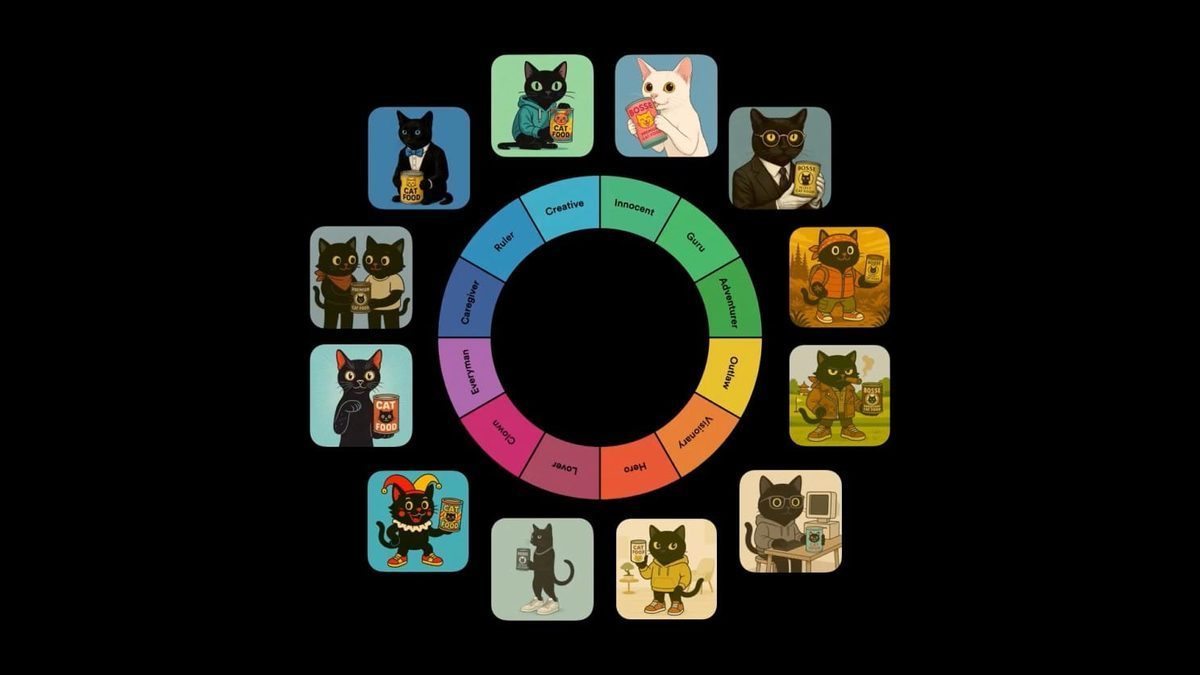
For hardware founders, the lesson isn’t just about speed. It’s about strategy. Johan leans heavily on a positioning model based on Carl Jung twelve archetypes to explain how brands acquire meaning. Ferrari becomes the Lover, Mini the Creative, IKEA the Caregiver. But his point is that even the most technical hardware product needs an archetype to come alive.
– Brands are like black holes until someone fills them. People use them to say who they are. That’s true whether you’re selling cat food or a climate battery.
He has applied the method for years with Nordic companies like Twinfinity, Apprl, Svedbergs and Fagerhult—shaping everything from product design to full brand platforms.
The biggest challenge is sticking with your brand strategy
Ronnestam warns against what he calls “drifting.” In fast-moving sectors, it’s tempting to rebrand whenever a trend pops up. For hardware companies, where the cost of change is magnified by long cycles and complex supply chains, the damage is even greater.
– The biggest challenge is sticking with your brand strategy. Don’t redesign because someone on the team is bored. Do the right thing for the audience, even if it takes years to pay off.
At the core of his message is a single word: awesome. For Johan, that means high energy, emotional punch, and the kind of impact that makes people smile before they know why. He breaks it down into six rules: create emotional impact, master storytelling, be visually magnetic, show purpose and boldness, connect with culture, and embrace AI without losing the human connection.
Johan sees clear parallels in hardware.
– For Svedbergs, different product lines need to embody different feelings while still belonging to the same brand. That’s where clear guidelines rooted in archetypes help—defining the emotional palette up front so that one line can play Creative while another leans more towards Caregiver.
Define your brand carefully
That pursuit of “awesome” is not a luxury for consumer goods or luxury brands alone. It is, Ronnestam insists, a survival strategy for deeptech.
– In the end, strategy beats tactics. A robot arm, a quantum chip, a solar cell—none of these win just because they work. They win when they resonate with culture, when they make people feel part of something bigger.
For early-stage founders, Johan’s advice is to define identity early and make the most of today’s accessible tools. He recommends using moodboards to capture positioning, experimenting with AI to play with language, colors and visuals, and leaning on ready-made platforms like Webflow or Shopify to build a presence that feels larger than the company’s size.
– To change the world with hardware, you can’t afford to be bland. You need to be awesome, says Johan.