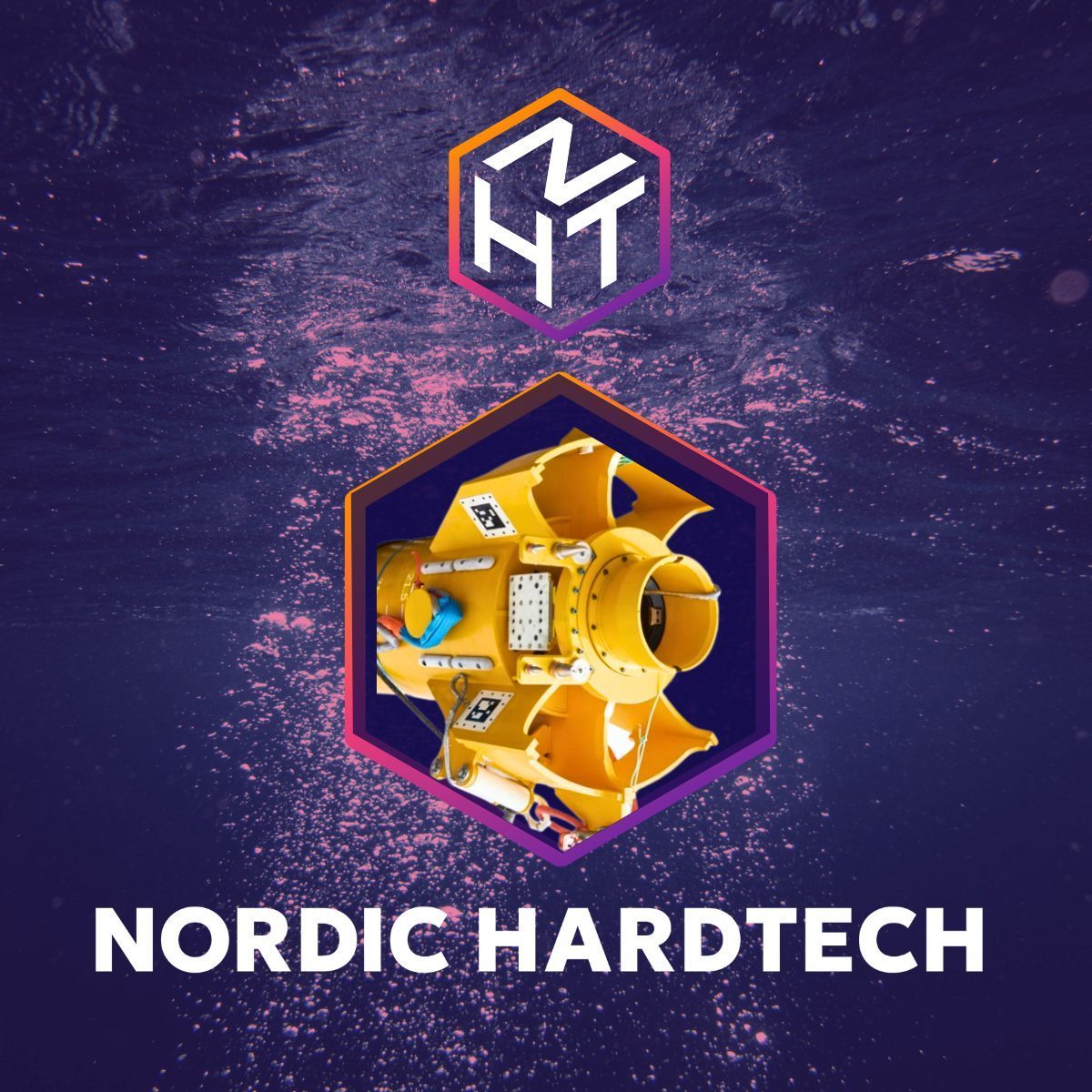
The next frontier for Nordic hardtech isn’t in the lab, it’s underwater. From robotic dredging and tidal kites to sensor-driven subsea systems, founders are wiring the ocean for efficiency and sustainability. Behind this shift lies a deeper current of investment, regulation and technology convergence that could turn the blue economy into the region’s next industrial wave.
Hardtech in the Nordics is usually associated with climate tech, energy storage or industrial automation, but a quieter transformation is happening below the surface. Across the region, new companies are taking on the sea itself as their lab and marketplace, using robotics, AI and advanced materials to solve long-standing marine challenges. The oceans that once powered Nordic trade are now becoming a proving ground for the next generation of hardware innovation.
What’s driving this movement is a convergence of pressure and possibility. Environmental regulation is tightening on industries like dredging, shipping and offshore maintenance, where traditional methods cause ecological damage and costly downtime. At the same time, advances in sensors, data processing and real-time control systems are unlocking operations once considered too complex or unpredictable to automate. The result is a new breed of startups that mix industrial hardiness with digital precision.
A simple but radical idea
In Norway, Granfoss was born from the chaos of the 2021 Suez Canal crisis, when founder Davoud Tayebi imagined robotic dredgers that could clean ports without stirring up pollution. Today the company’s autonomous vacuum systems operate in a closed loop, continuously removing sediment and filtering contaminants without disrupting marine life. It’s a simple but radical idea: replace episodic, destructive dredging with continuous, clean automation.
A few hundred kilometers south, Sweden’s CorPower Ocean is chasing energy in motion. Its buoy-based converters capture the rhythmic push and pull of the sea, a form of renewable power long seen as too inconsistent to commercialize. Backed by new strategic investors from Tokyo Gas and GTT Ventures, CorPower is now scaling from prototypes to production-ready wave farms, hoping to prove that wave energy can stand beside wind and solar.
Small nations and islands might reach true energy independence
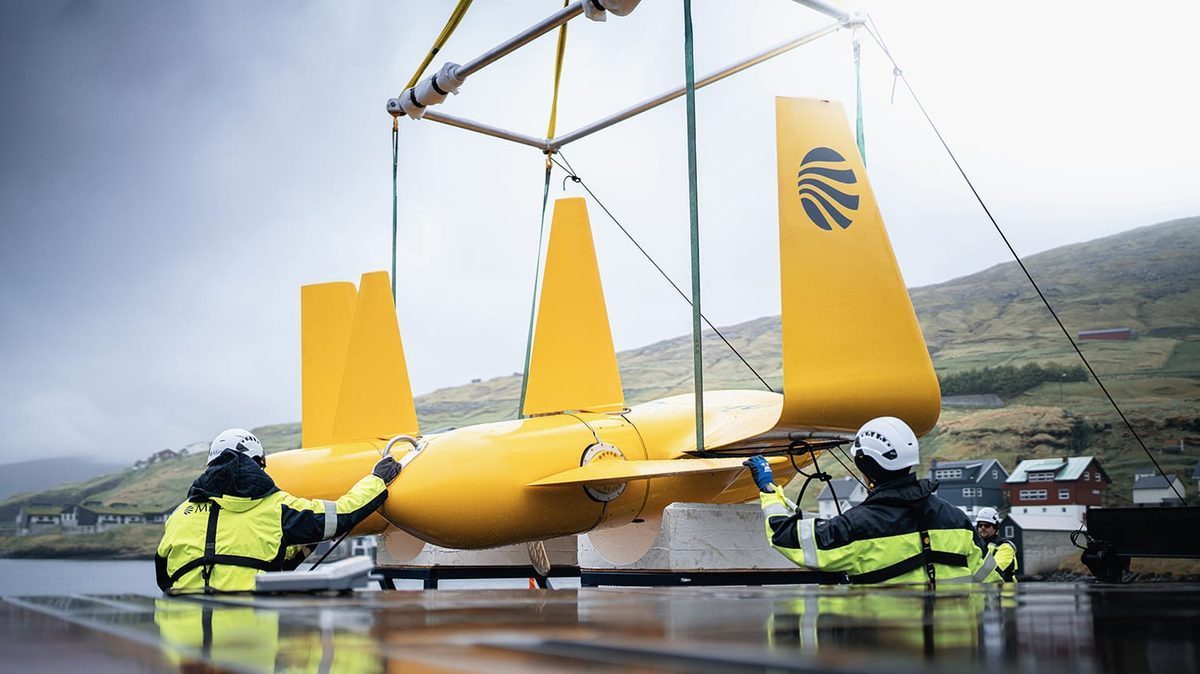
Fellow Swede Minesto takes another angle on ocean power with its underwater “tidal kite”, a winged generator that flies in figure-eights through slow-moving currents to multiply energy yield. With fresh funding from the Swedish Energy Agency to build a microgrid in the Faroe Islands, Minesto shows how small nations and islands might reach true energy independence from below the surface.
Not all progress is about clean energy. Norway’s General Oceans has grown into a fast-scaling group that builds subsea sensors, inspection drones and defense-grade monitoring systems. The company reported nearly a billion NOK in 2024 revenue and continues to expand globally, showing that ocean technology is no longer a niche within industrial hardware but a standalone sector with strategic weight.
Together these examples form a pattern. The most promising marine hardtech companies are hybrids that merge mechanical engineering, software intelligence and sustainability. Their markets are global, their challenges harsh, and their value lies in solving complex problems that can’t be fixed from land.
The Nordics have an opportunity to lead by example
Yet the road ahead is far from smooth. Saltwater corrodes, pressure crushes, and scaling underwater systems demands capital, endurance and trust from conservative industries. Certification, logistics and maintenance can slow even the most elegant design.
Still, the upside is immense. Every harbor, offshore structure and coastline represents potential demand for cleaner, more autonomous systems. And with growing investment in the blue economy, the Nordics have an opportunity to lead by example, translating their maritime heritage into a 21st-century industry.
What happens next beneath the waves may define not only how we manage our oceans but how we build technology that lasts. Under the surface, the next Nordic wave is already taking shape.