Europe first.
Or Europe left behind.
Europe has the research. It has the talent. It has the industrial base. So why do so many of its most ambitious companies still leave?
This week, we speak with Lisa Eriksson, Head of KTH Innovation and CEO of KTH Ventures, about the challenge of turning world-class research into world-leading companies, and why Europe's biggest obstacle may not be innovation itself, but fragmentation.
Nordic Hardtech Partners 🤝
- Lightbringer: AI-powered patent service helping tech companies protect their edge fast, with in-house legal expertise. Book an intro.
- Recuro: Growth partner for hardtech and deeptech. Scale with profit.
- SISP (Swedish Incubators & Science Parks): The network for 60+ incubators and science parks in Sweden. Find yours here.
- The Yard: Gothenburg’s hub for co-working, community, and serious hardware. Explore their memberships.
Nordic Hardtech Podcast 🎧
This week: Lisa Eriksson on turning research into companies
Europe Doesn't Have an Innovation Problem
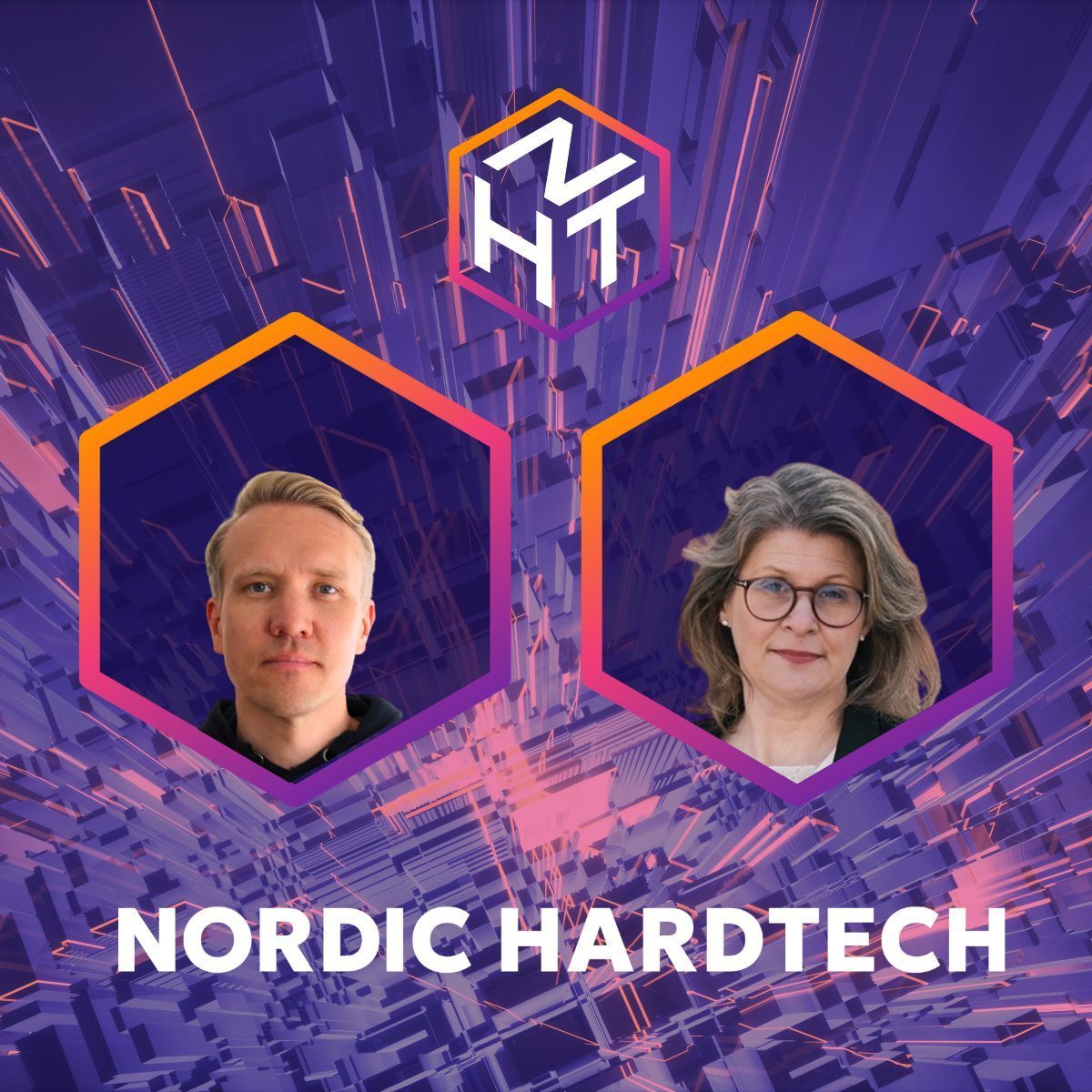
KTH Innovation's Lisa Eriksson believes Europe's next generation of industrial giants will be built through stronger ecosystems, earlier collaboration and a lot less fragmentation.
Last year, 440 new teams entered KTH Innovation. Forty companies were started. Twenty of them were deeptech ventures. Those numbers make KTH one of Europe's most active university innovation ecosystems, but for Lisa Eriksson, startup creation is only part of the story.
The bigger question is what happens next.
For more than two decades, Lisa has worked at the intersection of research, entrepreneurship and commercialization. She has watched researchers become founders, founders become CEOs, and startups become scaleups. Along the way, she has developed a clear view of what separates the teams that succeed from those that don't.
– Teams succeed. Technology pays, but teams succeed, says Lisa.
It's a deceptively simple observation. Deeptech is often framed as a technology challenge, but Lisa believes founders spend too much time obsessing over technology and too little time thinking about team composition.
– Too often we see teams that are four people with the same background. You need to bring in different perspectives. That's the most important thing.
Technical excellence not the main key
In Lisa's experience, the companies that make it furthest are rarely built by technical excellence alone. They are built by people who challenge each other, complement each other's strengths and adapt as new information emerges.
It's also one of the reasons KTH Innovation puts so much emphasis on practical experience. Unlike more selective startup programs, KTH focuses on helping people learn by building, testing and iterating. Not every idea becomes a company. Not every company becomes a success. But the experience compounds.
The same thinking sits behind the Pioneer Program, which matches experienced entrepreneurs with promising research projects long before they become companies. The goal is to shorten the path from lab to market and avoid what Lisa sees as one of Europe's biggest weaknesses.
– We're too linear. We're too linear in our model.
The greatest opportunities in science and engineering
Traditional commercialization often follows a familiar sequence: research, patents, validation, funding and finally customers. The process works, but it can take years. In deeptech, sometimes more than a decade.
Lisa argues that researchers, entrepreneurs, investors, corporates and even regulators need to be involved much earlier. The future belongs to ecosystems that bring relevant stakeholders together from the beginning rather than passing technologies from one stage to the next.
That need for speed is becoming even more important as AI transforms the economics of deeptech. While much of the attention has focused on consumer applications, Lisa sees some of the greatest opportunities in science and engineering.
– AI can be an enabling technology for deeptech. That speeds the time to market significantly.
What makes scaling unnecessarily difficult
Better simulations, faster validation and more efficient product development are helping companies reduce both costs and development cycles. In fields such as advanced materials, life science and fusion energy, that can mean years saved. But while AI may accelerate innovation, it won't solve what Lisa sees as Europe's most persistent challenge: fragmentation.
Throughout the conversation, she returns to the same concern. Europe has world-class universities, industrial leaders and technical talent. Yet founders still face a patchwork of regulations, standards and markets that make scaling unnecessarily difficult.
– If they never meet competition properly, they will not become better.
The result, she argues, is a continent full of promising startups that struggle to become category-defining companies. Europe excels at producing innovation, but too often fails to create the conditions needed for companies to grow into global leaders.
– We need much more of those category-defining companies.
Ambition alone is never enough
The challenge Lisa describes has become even more urgent as founders increasingly face pressure to relocate, raise foreign capital or move decision-making closer to larger markets. She believes Europe needs a stronger alternative.
– Europe has the potential to step up and be as significant as the US here, but we need reduced fragmentation, much more scale-up capital, and a joint mindset.
It's an ambitious vision. But after helping hundreds of founders navigate the journey from research to company, Lisa knows that ambition alone is never enough. The systems around it matter too. And if Europe wants to build the next generation of industrial giants, those systems may need to change faster than ever.
Listen to the full podcast interview with Lisa Ericsson on Spotify.
- A Swedish startup is building a robot dog for security. Surwera's founders reportedly turned an IKEA into their office while developing autonomous patrol technology. Sifted has the story.
- ICEYE is now building one satellite every week. The Finnish spacetech scaleup has secured €28.3M in additional R&D funding as it pushes toward 100 satellites annually and €1B in revenue by 2027.
- Space is becoming an asset class of its own. As SpaceX joins major stock indices, Swedish index and pension funds are expected to gain exposure to the world's most valuable space company.
- A Nordic quantum champion is gaining momentum. Finland's IQM Quantum Computers has won the Nordic Scaleup Award 2026, with the jury highlighting its technological leadership and growing role in Europe's quantum race.
- Sweden is replacing Rakel with a 4G/5G-based emergency network. The shift could unlock everything from real-time video to V2X communication.
What's brewing in the community?
- Norrsken's signature Impact Meetup returns to Stockholm on June 9 (17:30–20:00) with a focus on Physical AI. Together with Extreme Tech Challenge, founders, investors and operators will gather for startup pitches, discussions and networking at the intersection of AI and hardware. Sign up!
- Know a student building the next generation of hardware? Student Embedded Award is back, offering Sweden's top embedded systems projects a chance to win SEK 75,000, showcase their work at Scanautomatik and connect with the electronics industry.
- Several hardtech startups have made the Techarena Challenge 2026 finals. Among them are SeaPattern, Atech.dev, Relox Robotics, Sourceful Energy and TioTech, with winners set to be announced in Almedalen later this month.
- Electrification beyond the car takes center stage on June 10. Join founders from Zparq, Roxen Innovations, Luvly and Elonroad for a discussion on the technologies reshaping mobility, infrastructure and transport. Sign up.
- As always, check out our Nordic Hardtech Event Map for 2026 for more hardtech events across the Nordics and beyond.
Nordic Hardtech Funding List
See who’s raising, scaling and building across the Nordics.
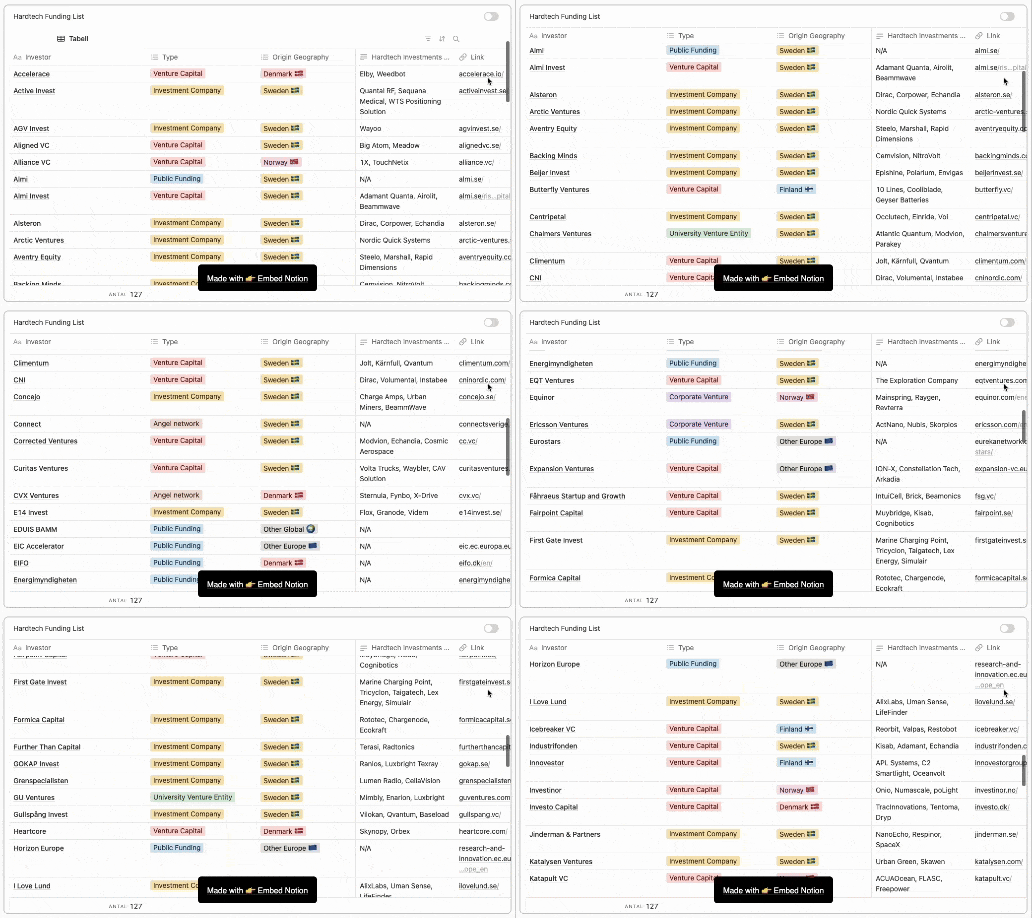
Nordic Hardtech is a platform for the hardtech ecosystem — sharing knowledge, bringing inspiration, and building community through podcasts, newsletters, events, and more.
💸 Fuel up. Scaling takes capital — The Nordic Hardtech Funding List shows you where to find it.
💥Get involved. Pitch a topic. Join the podcast. Get on the investor list– if you're hardtech.
→ Spotify | LinkedIn | nordichardtech.com
📩 hello@nordichardtech.com
    <picture><img class="kg-signup-card-image" src="/images/content/f227326276-Nordic-Hardtech---Digital-assets--square---5-.png" alt=""></picture>

        <div class="kg-signup-card-content">

            <div class="kg-signup-card-text ">
                <h2 class="kg-signup-card-heading"><span>Sign up for Nordic Hardtech</span></h2>
                <p class="kg-signup-card-subheading"><span>The platform for leaders of hardtech</span></p>

    <form class="kg-signup-card-form" method="post" action="https://nordichardtechnvotf6lc-forms.functions.fnc.fr-par.scw.cloud/">
        <div class="kg-signup-card-fields">
            <input class="kg-signup-card-input" name="email" type="email" required placeholder="Your email">
            <input type="text" name="website2" tabindex="-1" autocomplete="off" style="position:absolute;left:-9999px" aria-hidden="true">
            <button class="kg-signup-card-button kg-style-accent" type="submit">Subscribe</button>
        </div>
    </form>

                <p class="kg-signup-card-disclaimer"><span>Don't worry it's free. No spam. Unsubscribe anytime. </span></p>
            </div>
        </div>
    </div>