Still here.
Still scaling.
The old startup playbook said you eventually had to leave: Move closer to capital, closer to scale, closer to “where things happen”. But hardtech has always followed slightly different physics.
Factories matter. Test environments matter. Energy systems matter. Industrial customers matter. And for a growing group of Nordic companies, staying close to those realities has turned out to be an advantage, not a limitation.
This week, we look at 8 hardtech companies that scaled globally without fully abandoning the ecosystems that built them.
Nordic Hardtech Partners 🤝
- Lightbringer: AI-powered patent service helping tech companies protect their edge fast, with in-house legal expertise. Book an intro.
- Recuro: Growth partner for hardtech and deeptech. Scale with profit.
- SISP (Swedish Incubators & Science Parks): The network for 60+ incubators and science parks in Sweden. Find yours here.
- The Yard: Gothenburg’s hub for co-working, community, and serious hardware. Explore their memberships.
Nordic Hardtech Radar
This week: 8 Nordic hardtech companies proving that factories, infrastructure and industrial proximity still matter..
Geography Is Back On The Map
For a long time, success in tech seemed tied to relocation. Bigger markets. Bigger investors. Bigger ecosystems. But hardtech follows different rules. Several companies are proving that staying close to factories, infrastructure and industrial ecosystems can be a competitive advantage in itself.
Software can scale from almost anywhere. Real things often can’t. Building satellites, robots, batteries, quantum infrastructure or next-generation transport systems usually requires more than laptops and venture capital. It requires proximity: to manufacturing, testing environments, industrial partners and real-world deployment.
Here are 8 Nordic companies that scaled globally without fully leaving the ecosystems that shaped them.
🇸🇪 Exeger
Still producing its Powerfoyle solar cells in Stockholm, Exeger has become one of Europe’s clearest examples of advanced energy hardware scaling without abandoning local manufacturing. Staying close to production has allowed the company to keep tight control over materials, process development and product integration, something that becomes difficult once manufacturing moves too far away from engineering.
🇸🇪 Candela
Candela’s electric ferries and hydrofoil boats are now attracting attention far beyond Sweden, while the company remains deeply tied to Stockholm’s engineering and maritime ecosystem. Building next-generation marine technology close to shipyards, test environments and Nordic boating culture has helped shape both the product and the pace of development.
🇫🇮 ICEYE
From Finland to orbit. ICEYE has become one of Europe’s most important space and defence companies while keeping its roots firmly planted in the Nordic space ecosystem. The company has benefited from remaining close to highly specialized engineering talent and a growing regional focus on dual-use and sovereign infrastructure.
🇫🇮 Bluefors
Bluefors builds the ultra-low-temperature systems powering parts of the global quantum industry, proving that deeply specialized infrastructure companies can scale internationally from Finland. In sectors this technical, proximity to research environments and long-term engineering competence often matters more than startup hype cycles.
🇳🇴 TOMRA
Long before “climate tech” became a category, TOMRA was already building global infrastructure around sorting, recycling and resource optimization from Norway. Its long-term success says something important about industrial companies built close to the industries they actually serve.
🇳🇴 Kongsberg
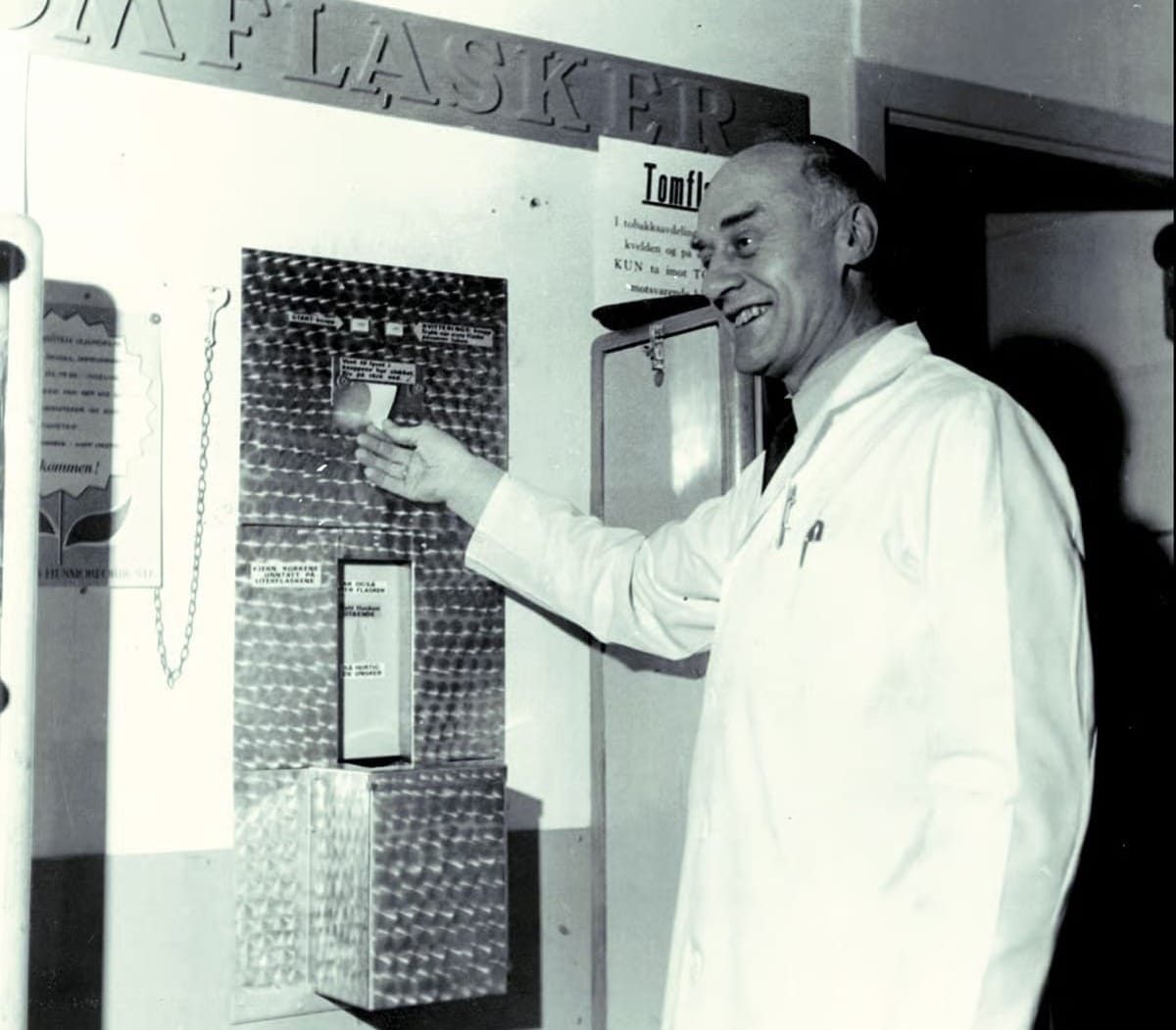
Defence, maritime systems, autonomy and industrial technology. Kongsberg remains one of the clearest examples of how deeply rooted industrial ecosystems can produce globally relevant technology companies. Decades of proximity to shipping, defence and offshore industries created capabilities that would have been difficult to replicate elsewhere.
🇩🇰 Universal Robots
Universal Robots helped put collaborative robotics on the global map without turning itself into a Silicon Valley company in the process. Denmark’s strong automation and manufacturing culture gave the company direct access to the kinds of industrial environments where collaborative robots actually needed to work.
🇩🇰 Topsoe
From industrial chemistry to hydrogen and energy transition infrastructure, Topsoe continues scaling globally while remaining tightly connected to Denmark’s industrial base. In complex energy systems, staying close to industrial partnerships and applied research environments can become a strategic advantage of its own.
1. 🇸🇪 Exeger: Solar cells still engineered and produced in Stockholm
2. 🇸🇪 Candela: Electric hydrofoils shaped by Nordic maritime engineering
3. 🇫🇮 ICEYE: Finnish satellite intelligence scaling across defence and space
4. 🇫🇮 Bluefors: Quantum-cooling infrastructure built from Finland
5. 🇳🇴 TOMRA: Recycling and sorting systems deployed worldwide
6. 🇳🇴 Kongsberg Gruppen: Defence and maritime systems rooted in Norway
7. 🇩🇰 Universal Robots: Collaborative robotics scaled from Odense
8. 🇩🇰 Topsoe: Energy-transition infrastructure tied to Danish industry
- Hövding is making a comeback. The Swedish airbag collar for cyclists returns this autumn with AI-supported crash detection, new sensors and backing from Austrian airbag manufacturer iSi Group.
- ICEYE, just featured in this week’s main story, has secured a €300 million credit facility as the Finnish satellite company continues scaling alongside Europe’s growing demand for sovereign defence infrastructure.
- Telenor is spinning out its IoT business into a standalone company. Connexion already connects 31 million devices across 200+ countries, showing how industrial connectivity is becoming infrastructure in its own right.
- RISE says software-defined vehicles are reshaping both cars and the infrastructure around them. AstaZero and SEEL are becoming increasingly important as Europe races to stay competitive in autonomy and electrification.
- A Vinnova-backed study from Swedish startup STILFOLD claims its curve-folded chassis design could significantly reduce both weight and embodied carbon in future transport systems.
What's brewing in the community?
- FMV is now looking for Swedish SMEs developing small unmanned ground vehicles, robotics and autonomous terrain systems as part of a new pre-commercial defence procurement initiative. Applications close June 3.
- Photonics is moving further into industry. RISE is now (May 27) hosting a nanophotonics training day in Kista focused on industrial sensors, photodetectors and real-world sensing applications.
- Arctic Business is looking for a new CEO in Luleå. The incubator has supported more than 200 startups across northern Sweden since 2005 and remains one of the region’s key deeptech and industrial startup hubs. Apply.
- Breakit’s Resilience Summit returns to Space Arena in Stockholm on May 27 with a bigger focus on defence, cyber, AI and dual-use infrastructure. Founders, investors and policymakers are all expected to be there. Sign up.
- For more hardtech events across the Nordics and beyond, check out our Nordic Hardtech Event Map for 2026. The list is continuously updated — feel free to send in tips!
Nordic Hardtech Funding List
See who’s raising, scaling and building across the Nordics.
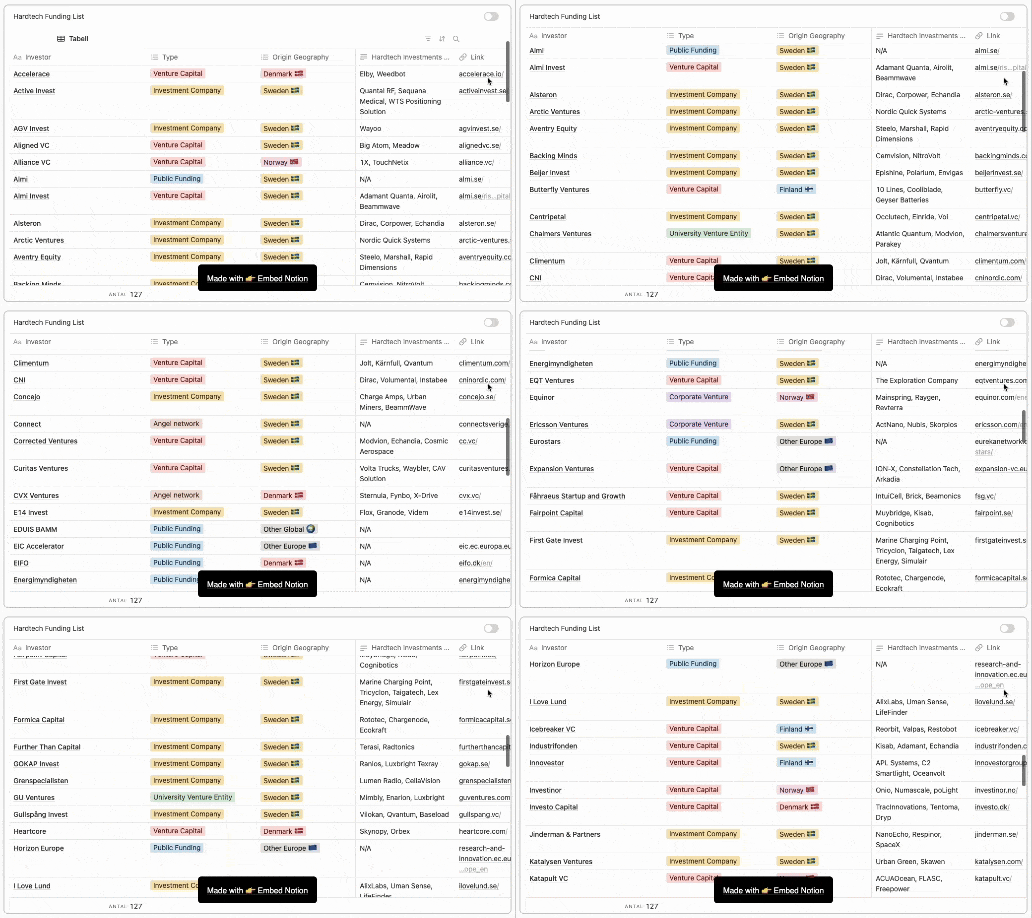
Nordic Hardtech is a platform for the hardtech ecosystem — sharing knowledge, bringing inspiration, and building community through podcasts, newsletters, events, and more.
💸 Fuel up. Scaling takes capital — The Nordic Hardtech Funding List shows you where to find it.
💥Get involved. Pitch a topic. Join the podcast. Get on the investor list– if you're hardtech.
→ Spotify | LinkedIn | nordichardtech.com
📩 hello@nordichardtech.com
    <picture><img class="kg-signup-card-image" src="/images/content/f227326276-Nordic-Hardtech---Digital-assets--square---5-.png" alt=""></picture>

        <div class="kg-signup-card-content">

            <div class="kg-signup-card-text ">
                <h2 class="kg-signup-card-heading"><span>Sign up for Nordic Hardtech</span></h2>
                <p class="kg-signup-card-subheading"><span>The platform for leaders of hardtech</span></p>

    <form class="kg-signup-card-form" method="post" action="https://nordichardtechnvotf6lc-forms.functions.fnc.fr-par.scw.cloud/">
        <div class="kg-signup-card-fields">
            <input class="kg-signup-card-input" name="email" type="email" required placeholder="Your email">
            <input type="text" name="website2" tabindex="-1" autocomplete="off" style="position:absolute;left:-9999px" aria-hidden="true">
            <button class="kg-signup-card-button kg-style-accent" type="submit">Subscribe</button>
        </div>
    </form>

                <p class="kg-signup-card-disclaimer"><span>Don't worry it's free. No spam. Unsubscribe anytime. </span></p>
            </div>
        </div>
    </div>