The next phase of automation isn’t defined by independence, but by interdependence. Across the Nordics, human-in-the-loop systems are emerging as a competitive advantage. Not because they feel safer, but because they scale smarter. When autonomy fails, control becomes an economic function.
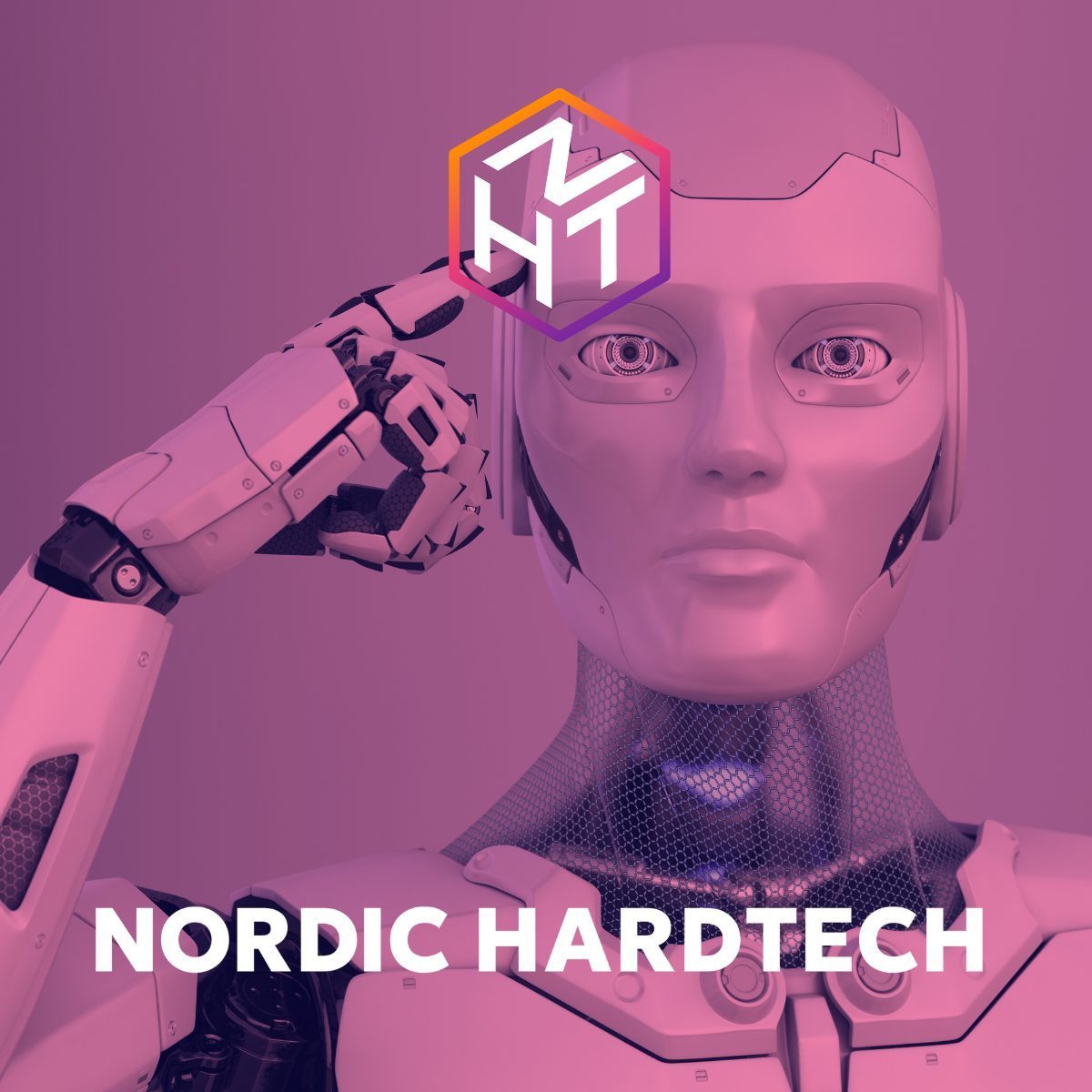
The dream of full automation has always been an economic one: lower labour costs, higher throughput, fewer errors. But as systems scale, that dream keeps colliding with reality. Complex environments don’t reward autonomy; they reward adaptability.
At ABB Robotics, this shift has become a cornerstone of design. The company’s latest cobots, launched this autumn, are engineered for high-speed environments where unpredictability is constant. By embedding operators in the feedback loop, ABB reduces downtime and maintenance cost while raising fault tolerance. Already in 2022, the company predicted this direction in its white paper The Future of Work is Collaborative:
“The most effective manufacturing environments of the future will blend people and robots seamlessly, where collaboration itself becomes a productivity multiplier.”
Across the Nordics, that philosophy is taking hold. Automation isn’t becoming less human. It’s becoming more deliberately human-shaped.
In Gothenburg, Smart Eye applies the same logic to mobility. Its driver-monitoring system, launched in June 2025, detects both drowsiness and alcohol impairment in real time — capabilities that reflect a growing shift from compliance tech to adaptive safety systems. Speaking in a company press release in June, CEO Martin Krantz said:
“With this innovation, we’re helping vehicle manufacturers meet upcoming regulations while improving driver safety and reducing fleet risk.”
These examples underline a broader truth: keeping humans in the loop raises short-term cost but lowers systemic risk. Fully autonomous systems remain expensive to validate, insure and regulate. The real advantage lies in a thin layer of oversight that absorbs uncertainty and ensures accountability.
"The real world is so freaking hard"
Meanwhile in Denmark, Universal Robots continues to dominate the global cobot market, while peers like Blue Ocean Robotics and OnRobot are pushing the concept further. Their systems rely on operators to guide robots through unstructured tasks — cleaning, inspection, telepresence — where human judgement remains cheaper and faster than additional AI training.
Stockholm’s Furhat Robotics turns social intelligence into product intelligence. Its expressive robot head, used in healthcare, logistics and research, translates real-time human cues into adaptive responses. Speaking to the company’s vision, CEO Samer Al Moubayed wrote in a blog post last year:
“To be truly useful in daily life, humanoid robots need to go beyond executing commands — they must understand, respond, and engage with humans in ways that feel natural and emotionally resonant.”
Further north, 1X Technologies in Norway takes the concept into physical service automation. Its humanoid platform, used for security and logistics, combines remote human control with semi-autonomous movement. As CEO Bernt Børnich said in an interview with Humanoids Daily in September 2025:
“The real world is so freaking hard. It’s very easy to look at a robot and personify it so it has the same capabilities as a person, but the truth is we’re not really there."
More promise than product
Even as the mass-market launch of humanoids remains distant, the technology economy around them is already shaping business models. Because humanoids require human-style form factors, they unlock value in sectors built for humans: logistics, inspection, elder care, hospitality.
According to an industry-insight piece by Robeco in July, humanoid adoption hinges on dexterity and component cost remains the largest barrier. And as the International Federation of Robotics noted in its Vision and Reality Report in August, “humanoids are still more promise than product.”
That gap between promise and viability shows why control, human-in-the-loop, remains a strategic economic lever. When machines can’t yet operate unaided, human oversight becomes the path to scale and monetization.
Nordic hardtech is uniquely placed to lead this shift. With its safety-critical heritage and trust-driven engineering, the region offers fertile ground for hybrid intelligence, where control is shared, not lost. Perhaps the real promise of automation isn’t independence but interdependence, and the collaboration still to come.