Optimism isn’t what drives Europe’s builders right now. Across the Nordics and beyond, innovation is shaped by uncertainty, security and proximity. Some of it keeps the lights on, some of it arms the borders. And all of it forces a new conversation about what progress really means.
For a long time, Europe’s tech story was about progress: faster chips, cleaner energy, smarter cities. Now the conversation sounds different. Terms like readiness, supply chain control and national autonomy are gaining traction. It is no longer only about what we can build; it is increasingly about what we must build to remain independent and viable.
As Will Blythe, co-founder of UK-based Arondite, recently put it at the Resilience Conference:
“Your ability to rapidly integrate systems that weren’t designed to be used together and get them working together effectively basically defines how fast defence can adapt once the war starts.”
That logic reaches far beyond defence. Across Europe, and particularly in the Nordics, the reflex to build for adaptability has begun to shape energy systems, materials engineering and infrastructure itself. Hardware is becoming the centre of resilience thinking rather than an afterthought.
In Finland, ICEYE has received more than €41 million in national R&D funding as part of a broader €250 million programme to scale production and develop new radar capabilities. Its synthetic-aperture satellites already serve governments and climate agencies, providing imagery during floods and natural disasters.
In Sweden, Nordic Air Defence is developing the Kreuger 100 drone interceptor, a low-cost, dual-use system designed to counter aerial threats in real time. Its work shows how Nordic hardtech is entering territories once dominated by major defence contractors, blurring the line between civilian and military engineering.
It’s not only defence startups that attract capital. Helsing, the AI-enabled defence company co-founded by Spotify’s Daniel Ek, recently raised €600 million at a valuation near €12 billion. The firm develops autonomous mission software and sensor systems for European forces. For some, Helsing represents a long-overdue industrial awakening; for others, a worrying sign that Europe is not just preparing for conflict but starting to invest in it. As Euronews put it:
“The tension between innovation and militarisation is becoming Europe’s new fault line.”
That tension is not limited to defence. When NVIDIA’s Jensen Huang told an audience at VivaTech in Paris that “AI is the greatest equaliser of people the world has ever created,” he was addressing an Europe scrambling to keep up in the race for computing power. His point was simple: infrastructure matters, and those who build it will define the next decade of competitiveness.
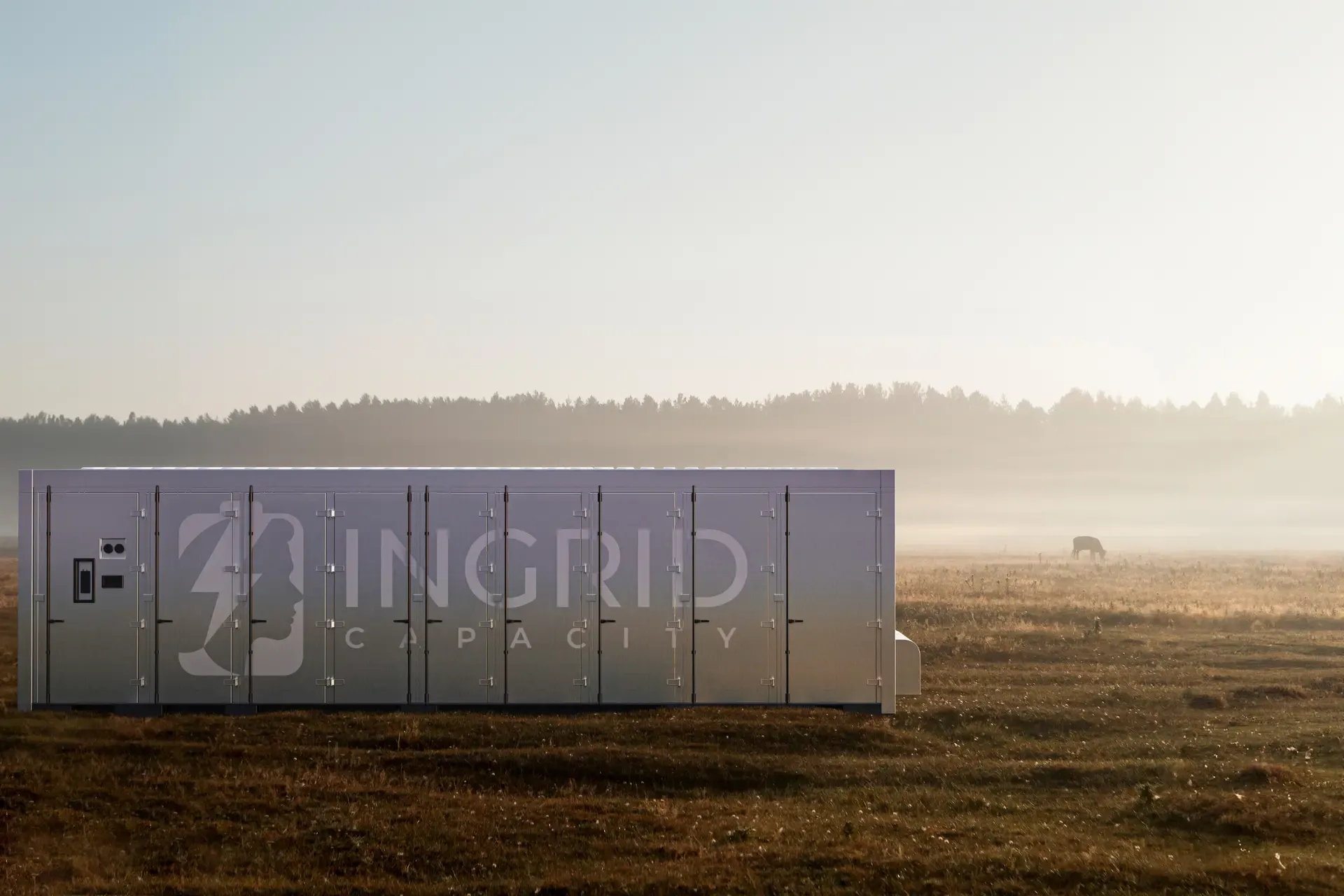
Energy infrastructure is being rebuilt with a similar mindset. Ingrid Capacity and Locus Energy are installing large-scale battery systems across Sweden to stabilize the grid. Unlike the drone projects, few debate whether this kind of resilience is desirable, yet all of it grows from the same soil of geopolitical anxiety.
In the Nordics, we find ourselves at a crossroads. Our legacy of open innovation, circular design and strong institutions gives us an advantage, yet this era demands urgency, scale and purpose — qualities that often swell in times of fear. The challenge is to keep our collaborative ethos while building faster and stronger.
Ultimately, the question is not whether we are building again, but what we choose to prioritize. Are we building for stability or preparing for confrontation? Probably both. What matters is to decide consciously.
When optimism fades, intent remains. And in Europe today, intent may be the most important raw material of all.