Great ideas are everywhere.
Factories are harder.
Sweden loves innovation. Prototypes. Breakthroughs. Big visions scribbled on napkins. But somewhere between the first prototype and full-scale production, a surprising number of hardware startups hit a wall. Not because the technology fails, but because industrialization arrives too late.
This week, Monica Bellgran (Vice President for Innovation at Mälardalen University and co-founder of Produktionsänglar) explains why production should enter the conversation far earlier. And why Sweden risks falling behind if industrialization keeps being treated as an afterthought.
Nordic Hardtech Partners 🤝
- Lightbringer: AI-powered patent service helping tech companies protect their edge fast, with in-house legal expertise. Book an intro.
- Recuro: Growth partner for hardtech and deeptech. Scale with profit.
- SISP (Swedish Incubators & Science Parks): The network for 60+ incubators and science parks in Sweden. Find yours here.
- The Yard: Gothenburg’s hub for co-working, community, and serious hardware. Explore their memberships.
Nordic Hardtech Podcast 🎧
This week: Monica Bellgran on why hardware startups scale too late.
Built in Sweden? Only if you survive the manufacturing gap first
Sweden is great at building prototypes. Scaling production is another story. Monica Bellgran explains why industrialization enters too late, and why that risks slowing down the next generation of Nordic hardware companies.
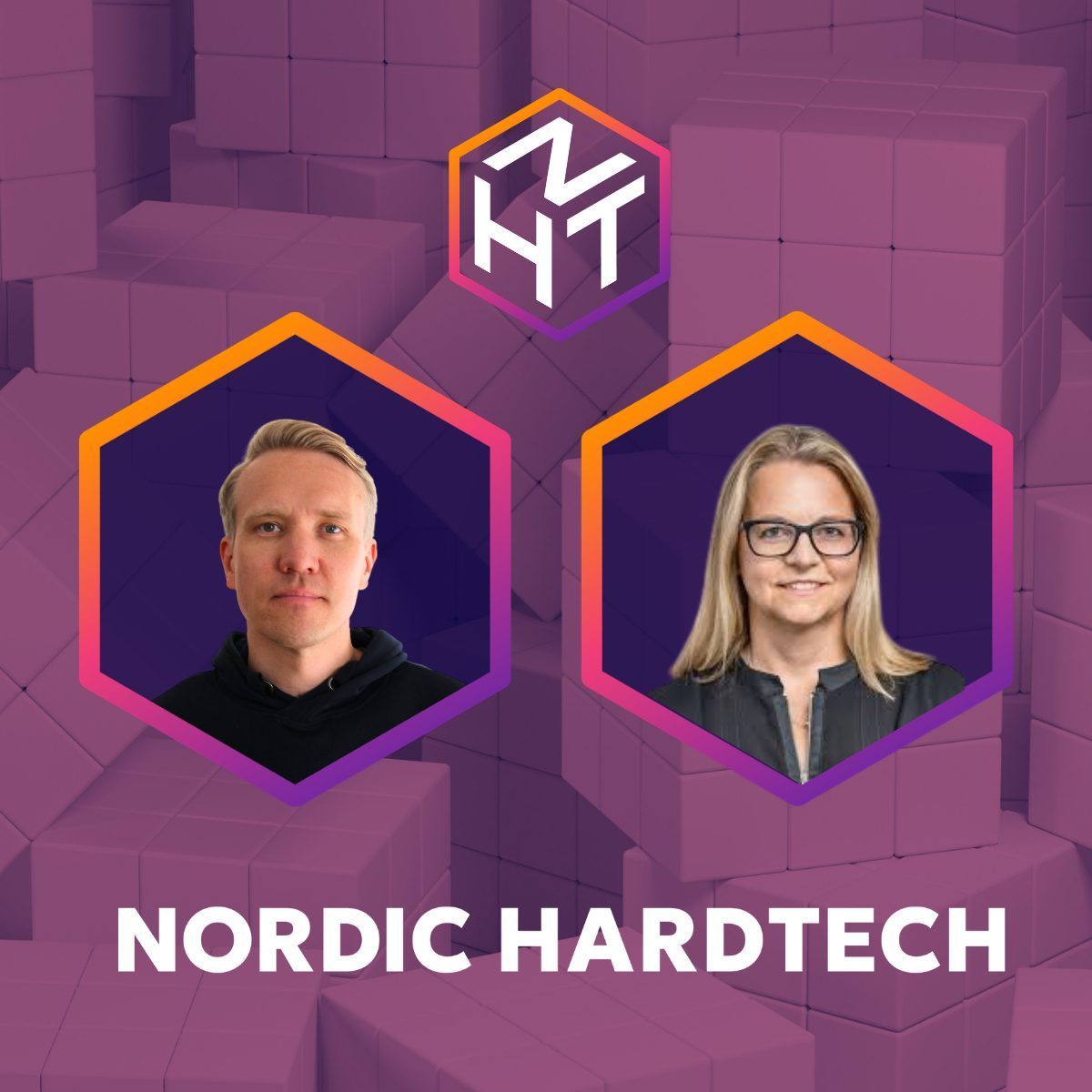
Everyone talks about innovation, much fewer industrialization.
For Monica Bellgran, vice rector for innovation at Mälardalen University and co-founder of Produktionsänglar, that imbalance has become impossible to ignore. Sweden is full of promising hardware startups. The problem is getting them through the brutal stretch between prototype and scalable production.
Bellgran has spent decades moving between academia and industry, with roles spanning Volvo CE, Haldex, LKAB, KTH and beyond. That dual perspective shaped her view of production as something far more strategic than many founders realize.
– Production is where all your previous decisions become visible. Especially in assembly. That’s where you discover whether the product can actually be manufactured, assembled and made profitable, Monica says.
"Many founders approach manufacturing far too late"
The challenge is especially severe for hardware startups. Software companies can scale globally with relatively low friction. Hardware companies cannot. That gap between prototype and production is also what led Bellgran to co-found Produktionsänglar, an initiative designed to connect startups with industrial coaches, manufacturers and production expertise before scaling becomes critical.
Many founders, she says, still approach manufacturing far too late in the process.
– We hear it all the time: “It’s too early to bring production in.” No. Production should be there already when you’re sketching the idea on a napkin at the pub.
The consequences of delaying industrialization are becoming more visible as countries like China continue accelerating production speed and shortening scale-up timelines. Bellgran argues that this is no longer just a startup issue. It’s becoming a geopolitical one.
At the same time, she believes Sweden still holds major advantages. The country’s industrial base, engineering culture and manufacturing competence remain globally competitive, especially as automation and AI reduce the importance of low-cost labor.
– Automation costs roughly the same wherever you place it. That changes the equation, Monica explains.
"You’re paying for someone else’s learning"
But Monica also warns against blindly chasing technology without fixing underlying operational problems first. Factories and production systems still need strong processes underneath the software layer.
One recurring issue Monica sees among hardware startups is outsourcing production too early, often without realizing how much product knowledge disappears alongside the manufacturing itself.
– If you give away your final assembly, you’re paying for someone else’s learning, she says.
That learning matters. Especially in early-stage hardware companies where manufacturing feedback directly shapes future product generations. Through Produktionsänglar, startups are instead encouraged to collaborate closely with Swedish manufacturers while building supply chains and production systems together.
"But what is a circular factory?"
Sustainability is also becoming part of the discussion. Monica argues that circularity should not stop at the product itself. Production systems and factories need to evolve as well.
– Everyone talks about circular products. But what is a circular factory?
The broader concern, however, goes beyond startups and manufacturing methods. Bellgran believes Sweden still takes industrial development too much for granted, despite how central it remains to the country’s economy and competitiveness.
– Industry built this country. Yet we still have to sit in meetings explaining why industrial development matters, says Monica.
And in a world shaped by supply chain disruptions, geopolitical instability and rapid technological shifts, she argues that production is no longer just an operational function buried deep inside organizations. It’s strategic infrastructure.
Stream the full episode on Spotify (this one in Swedish)
Lately ⏮️
Selected news from the hardtech ecosystem
- Finnish spinout Reduciner has raised €3.6M to turn captured CO2 into industrial fuel. The VTT-born startup is now building a 1MW pilot for cement, steel and lime industries.
- Impact Loop has mapped 150 Swedish tech leaders driving impact in 2026. The list is packed with familiar hardtech names, from Paebbl and AirForestry to Cemvision, Einride, Blykalla and CorPower Ocean.
- Vinnova is backing six industrial digitalization projects with SEK 350M, targeting everything from autonomous forestry to energy-flexible industry.
- Swedish startup Atech has raised a sizeable pre-seed round for an AI-driven platform aimed at speeding up hardware prototyping and electronics development.
- Stefan Ytterborn (who we happened to interview in our very first pocast episode) is back. After Cake collapsed, his new motorcycle venture Rebake has raised close to SEK 20M to try again.
Up next ⏭️
What's brewing in the community?
- LEGO Group is releasing its first LEGO road bike model on June 1, complete with a working drivetrain and steering system — mechanical engineering, brick by brick.
- Techarena Zero 2026 heads to Kista on May 28. Expect climate tech, industrial transition, AI-energy discussions and a room full of Nordic founders, investors and policymakers.
- A Vinnova-led discussion on AI, climate and system complexity goes live May 13. Topics include the race to superintelligence and how uncertainty shapes industrial decision-making. Sign up here (digital event).
- For more hardtech events across the Nordics and beyond, check out our Nordic Hardtech Event Map for 2026. The list is continuously updated — feel free to send in tips!
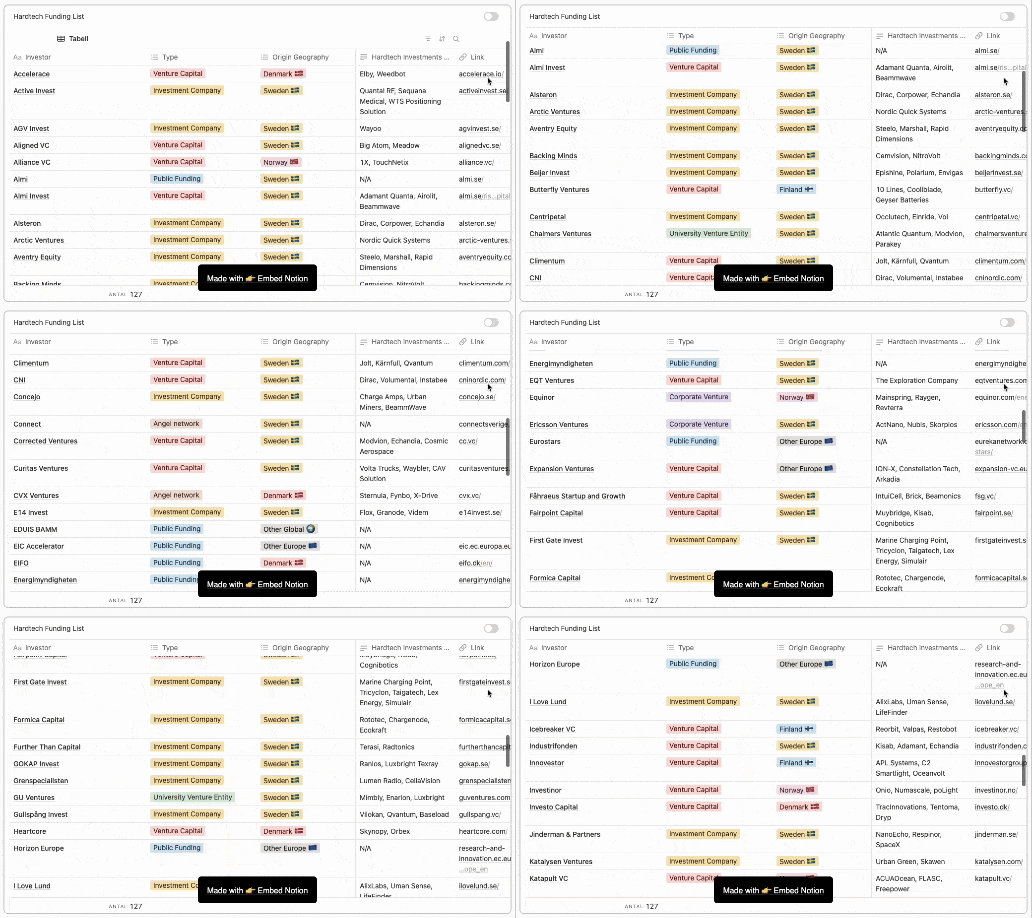
Nordic Hardtech Funding List
See who’s raising, scaling and building across the Nordics.
Nordic Hardtech is a platform for the hardtech ecosystem — sharing knowledge, bringing inspiration, and building community through podcasts, newsletters, events, and more.
💸 Fuel up. Scaling takes capital — The Nordic Hardtech Funding List shows you where to find it.
💥Get involved. Pitch a topic. Join the podcast. Get on the investor list– if you're hardtech.
→ Spotify | LinkedIn | nordichardtech.com
📩 hello@nordichardtech.com
    <picture><img class="kg-signup-card-image" src="/images/content/f227326276-Nordic-Hardtech---Digital-assets--square---5-.png" alt=""></picture>

        <div class="kg-signup-card-content">

            <div class="kg-signup-card-text ">
                <h2 class="kg-signup-card-heading"><span>Sign up for Nordic Hardtech</span></h2>
                <p class="kg-signup-card-subheading"><span>The platform for leaders of hardtech</span></p>

    <form class="kg-signup-card-form" method="post" action="https://nordichardtechnvotf6lc-forms.functions.fnc.fr-par.scw.cloud/">
        <div class="kg-signup-card-fields">
            <input class="kg-signup-card-input" name="email" type="email" required placeholder="Your email">
            <input type="text" name="website2" tabindex="-1" autocomplete="off" style="position:absolute;left:-9999px" aria-hidden="true">
            <button class="kg-signup-card-button kg-style-accent" type="submit">Subscribe</button>
        </div>
    </form>

                <p class="kg-signup-card-disclaimer"><span>Don't worry it's free. No spam. Unsubscribe anytime. </span></p>
            </div>
        </div>
    </div>