This week, one of the most talked-about hardtech stories in the Nordics is not about funding or policy. It is about proof. Donut Lab’s battery claims have triggered independent testing, investor scrutiny and a wider debate about how hardware credibility is built. But beyond the battery itself, the episode reveals something bigger: validation has become part of the strategy in deeptech.
Also in this newsletter: A book launch invitation you don't want to miss!
Deep tech isn’t just harder. It’s a different game.
On March 24, Ola Wassvik (co-founder of Lightbringer) launches A Game of Deep Tech at Norrsken House Stockholm — a founder’s field guide distilled from two decades of building and breaking companies at the edge of the possible.
Expect practical lessons on teams, prototypes, manufacturing, margins and momentum.
March 24 · 17:00–18:30 · Norrsken House Stockholm
RSVP here!
Nordic Hardtech Current Partners 🤝

- Lightbringer: AI-powered patent service helping tech companies protect their edge fast, with in-house legal expertise. Book an intro.
- Recuro: Growth partner for hardtech and deeptech. Scale with profit.
- SISP (Swedish Incubators & Science Parks): The network for 60+ incubators and science parks in Sweden. Find yours here.
- The Yard: Gothenburg’s hub for co-working, community, and serious hardware. Explore their memberships.
Nordic Hardtech Outlook
This Week: the Donut Lab case and what it says about credibility, momentum and trust in hardtech.
The Validation Economy
Independent tests from VTT now confirm parts of Donut Lab’s battery performance, while other headline claims remain unverified. But beyond the technical debate, the episode reveals something bigger: in 2026, validation itself has become strategic currency in deep hardware.
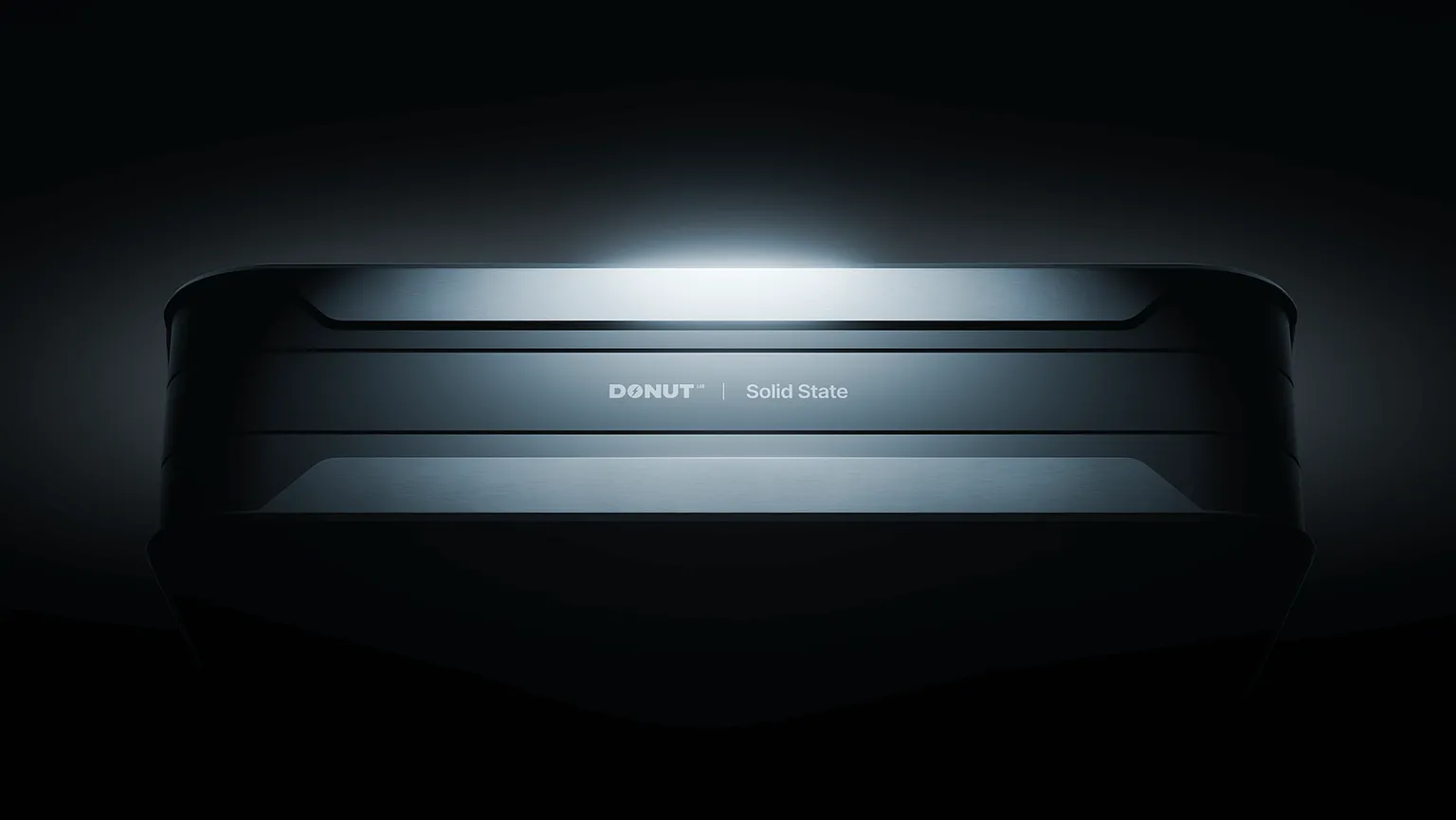
When Donut Lab presented its solid-state battery earlier this year, the reaction was immediate. The Finnish startup claimed it had developed a production-ready solid-state battery capable of charging to 80 percent in roughly five minutes, operating under extreme heat and lasting up to 100,000 cycles. The battery, the company said, would launch in an electric motorcycle from Verge later this year.
The announcement drew attention and skepticism. Solid-state batteries have long been described as the next leap in energy storage, yet repeated industry promises have made experts cautious.
Rather than retreating, Donut Lab commissioned independent testing through VTT Technical Research Centre of Finland and released selected results publicly via a campaign titled “I Donut Believe.” Skepticism became part of the narrative.
"As identified by the customer"
VTT confirmed that the tested battery cell could reach 80 percent charge in roughly 4.5 minutes. It also withstood temperatures of up to 100°C, delivering even higher usable capacity at elevated heat and showing no visible damage after recharging.
Explaining the thermal behavior, CTO Valle Piipo said:
– It is because the cell’s internal resistance continues to decrease at these temperatures.
At the same time, VTT described the tested object carefully as “a solid-state battery cell as identified by the customer.” The wording matters. It confirms that a physical cell was independently measured. It does not independently verify the underlying chemistry or the broader performance claims.
What has been validated so far concerns a single cell tested in laboratory conditions. It does not yet confirm pack-level performance, large-scale manufacturing readiness, the stated energy density or the projected lifetime. Additional results released this week continue the same pattern, incremental validation in public view.
The psychology of “buying a dream”
The discussion expanded when Yle reported on confidential investor letters from CEO Marko Lehtimäki describing a sales pipeline exceeding 1.2 billion euros and ambitious return scenarios. Some smaller investors reportedly felt time pressure to commit.
Entrepreneur Robert Järvinen, who previously invested in the failed Europositron battery venture, told Yle that the pattern felt familiar, describing grand promises, time pressure and the psychology of “buying a dream.”
Donut Lab has not been accused of fraud, and VTT confirms it has tested a physical battery cell. Unlike past scandals, there is demonstrable hardware and independent measurement.
Validation as Strategy
What makes the episode notable is not only the battery metrics, but how validation unfolded. Independent test results were released incrementally and publicly. Third-party measurement became part of the communication strategy.
Battery researcher Patrik Johansson commented in Svenska Dagbladet:
– Right now, we are living with far too little data to properly assess the technology. But from a PR perspective, it is brilliant.
What is notable is not only the performance data, but the visibility of the validation process itself. Independent measurements were published and debated in real time, alongside investor commentary and media scrutiny. In that environment, data is no longer just documentation. It becomes positioning.
Whether Donut Lab ultimately delivers on its most ambitious claims remains to be seen. What is already clear is that credibility now unfolds in public. Validation shapes perception, momentum and capital.
Lately ⏮️
Selected news from the hardtech ecosystem
- Trener Robotics raises $32M to turn industrial robots into adaptive teammates, replacing rigid programming with conversational, AI-driven control across ABB, UR and FANUC systems.
- Saab is opening up to deeper startup partnerships as defence demand surges, with CTO Petter Bedoire highlighting AI scale-out as a priority gap, in an interview with Sifted.
- Should Sweden subsidise junior hiring in the AI era? A new report from Akavia and TechSverige proposes tax cuts to support graduate employment. Read more.
Up next ⏭️
What's brewing in the community?
- Ignite Sweden highlights this month’s key expansion calls, from US and UK life science programs to Arctic pitch contests and SEK 200M in Swedish energy pilots. Explore the opportunities.
- Space startups: applications are open for the CASSINI Business Accelerator, a six-month EU programme run by Sting and partners for 20 top space ventures per batch. Deadline March 6.
On March 24, Ola Wassvik (co-founder of Lightbringer) launches his deep tech founder’s playbook at Norrsken House Stockholm.
- ARCTIC15 launches “100 Innovations”, an evidence-over-hype showcase selecting startups based on validation and traction rather than pitch performance. Applications close May 1.
- For more hardtech events across the Nordics and beyond, check out our Nordic Hardtech Event Map for 2026. The list is continuously updated — feel free to send in tips if there’s an event we should include.
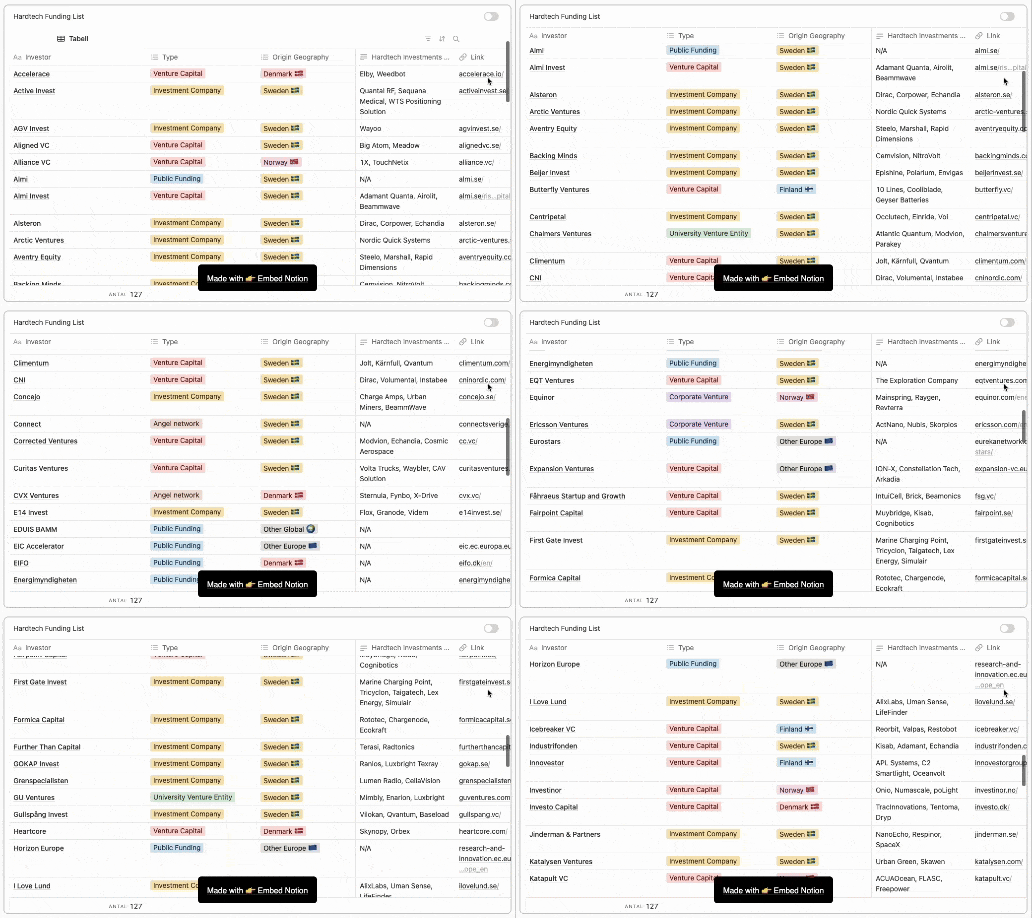
Nordic Hardtech Funding List
See who’s raising, scaling and building across the Nordics.
Nordic Hardtech is a platform for the hardtech ecosystem — sharing knowledge, bringing inspiration, and building community through podcasts, newsletters, events, and more.
💸 Fuel up. Scaling takes capital — The Nordic Hardtech Funding List shows you where to find it.
💥Get involved. Pitch a topic. Join the podcast. Get on the investor list– if you're hardtech.
→ Spotify | LinkedIn | nordichardtech.com
📩 hello@nordichardtech.com