Defence isn't new.
Execution often is.
Defense itself has never been marginal. But innovation built for military and security contexts is still often shaped by civilian assumptions. The core challenge remains the same: designing, validating and scaling hardware for organisations where the buyer, the user and the risk owner are rarely the same.
This week’s main feature is based on our latest podcast conversation with Max Villman, former Swedish fighter pilot and now founding partner at Gungnir – offering a perspective shaped by operating inside the system, and now investing in teams trying to build for it.
Nordic Hardtech Partners 🤝

- Lightbringer: AI-powered patent service helping tech companies protect their edge fast, with in-house legal expertise. Book an intro.
- Recuro: Growth partner for hardtech and deeptech. Scale with profit.
- SISP (Swedish Incubators & Science Parks): The network for 60+ incubators and science parks in Sweden. Find yours here.
- The Yard: Gothenburg’s hub for co-working, community, and serious hardware. Explore their memberships.
Nordic Hardtech Podcast 🎧
This week: Building, validating and investing in military-grade technology.
From Cockpit to Cap Table: Inside Nordic Defense Tech
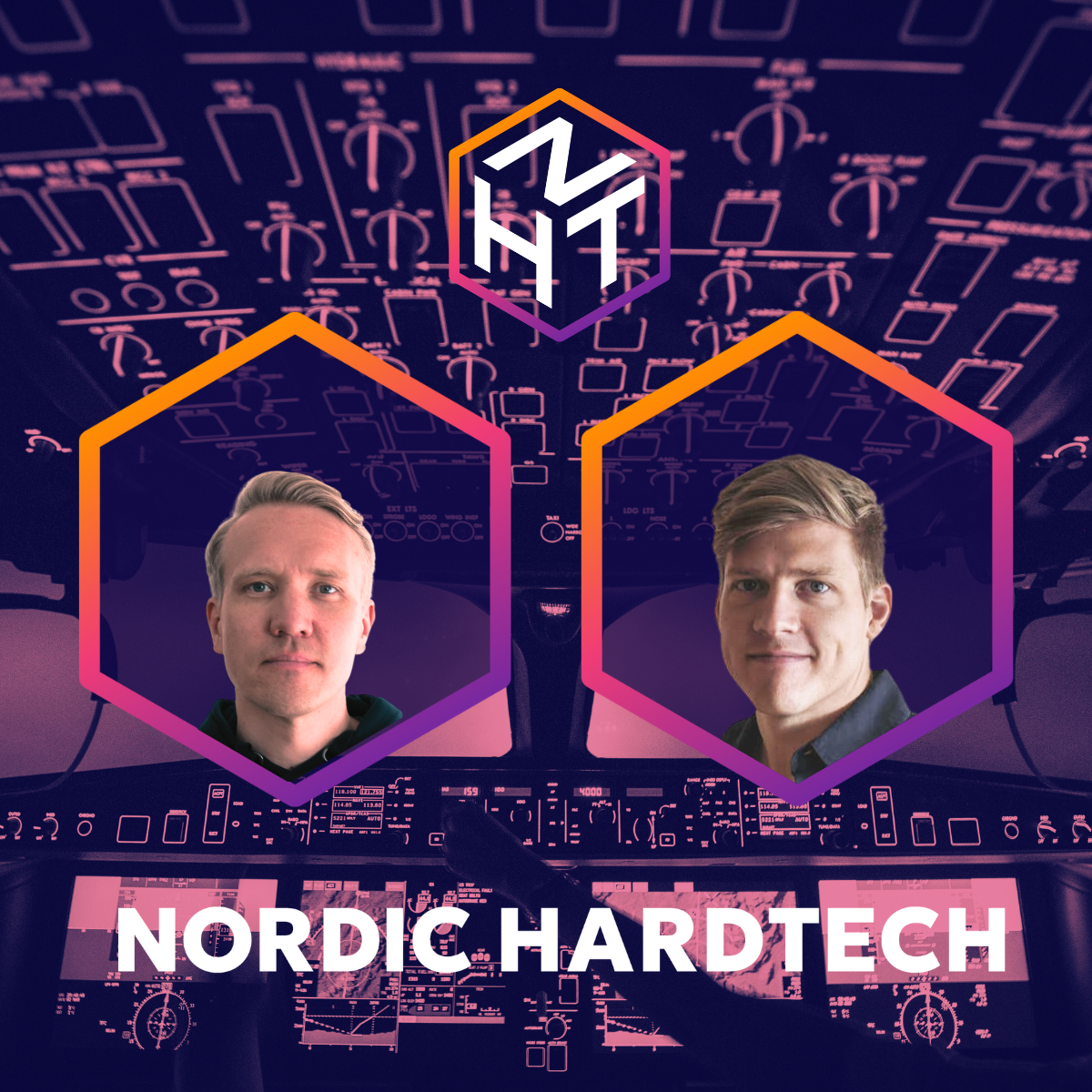
Former Swedish fighter pilot Max Villman now invests in early-stage defense and deep tech as founding partner at Gungnir. He shares what fighter pilot training has taught him about validation, decision-making and why much of defense tech is built on the wrong assumptions.
Fighter pilot training prioritises preparation over reaction. The focus is on how candidates process information, make decisions under pressure and operate as part of a larger system where individual performance is inseparable from collective outcome. From early screening to advanced simulation, the goal is not technical brilliance alone, but reliable judgement in complex, fast-moving environments.
– They’re not just testing if you’re smart enough or physically fit. They want to understand how you process information under stress, and whether you function as part of a larger system, even if you’re alone in the cockpit, says Max.
That systems mindset now shapes how he evaluates defense and security startups. One recurring pattern he sees is founders optimising for the wrong audience. In military contexts, the buyer, the user and the risk owner are rarely the same person, yet many teams still approach defense as if it were a conventional enterprise market.
– You don’t build defense tech by selling to generals. You need to validate with the people who actually use the system.
"You need to talk to everyone"
Senior leadership may control budgets and procurement, but meaningful validation happens much closer to operations. When that step is skipped, startups risk building technology that aligns with strategy documents rather than real-world constraints such as environment, training level, maintenance burden and operational tempo.
– A lot of venture firms focus on admirals and generals. They’re smart people, but it may have been a long time since they personally used the kind of systems startups are building today.
Accessing end users is rarely straightforward. There is no single point of contact into the armed forces, no universal innovation office that solves everything. Founders often experience this as fragmentation or inertia, but Villman argues it reflects how military organisations actually function.
– There’s no right answer to who you should talk to. You need to talk to everyone. That’s part of being a founder.
While military organisations were historically cautious about interacting with startups, that culture is gradually shifting. Across Europe, more exercises, test environments and cross-sector events are emerging, allowing startups to engage earlier and more informally than before. The barrier is lower, but the work remains.
"It improves when you do things, get feedback and adjust"
Another concept Villman carries over from aviation into investing is situational awareness: maintaining an up-to-date understanding of what is happening around you and how conditions are changing. In both aviation and startups, it is easy to mistake information volume for clarity.
– You can sit at your computer all day and consume information. But situational awareness improves when you do things, get feedback and adjust.
That feedback loop is closely tied to debriefing, a practice Villman believes many entrepreneurs undervalue. In aviation, debriefs are mandatory after every mission. They are structured, honest and forward-looking.
– It’s just as important to identify what went really well. Otherwise you risk discarding your strengths.
Today, Villman is closing the initial fund at Gungnir and preparing for its first investments. His focus is on teams that understand the structural realities of defense markets: long sales cycles, fragmented stakeholders and the need for early, credible validation. He looks for founders who are willing to engage deeply with users long before scaling becomes an option.
– There are no shortcuts. Talk to users. Get feedback early. Improve your situational awareness. And keep moving.
Lately ⏮️
Selected news from the hardtech ecosystem
- Industrial autonomy scales fastest in predictable environments. RISE Research Institutes of Sweden points to mining, agriculture and energy — where testing and validation are now hard requirements.
- Uppsala Innovation Centre is partnering with the Swedish Air Force to help startups reach defense end users and launch pilots faster. A concrete example of the access problem discussed in this week’s main interview, now starting to be addressed.
- After bankruptcy, rebuild and renewed growth, Airinum has been acquired by a strategic owner with global scale. Founder Alexander Hjertström closes a decade-long hardware journey — from idea to exit, the hard way.
- Swedish Sigrid Therapeutics has signed a non-dilutive global licensing deal to extend its SiPore® materials platform into consumer oral health, unlocking new markets without distracting from the core business.
- Sweden’s first Strategic Innovation Programmes are wrapping up after 12 years. Backed by Vinnova, they've delivered 1,400 projects across materials, production and mining, reshaping Sweden’s innovation landscape.
Up next ⏭️
What's brewing in the community?
- The world’s largest Fixathon is closing with a Grand Finale at Norrsken House on Jan 29. The event is sold out, but a waiting list is open for demos, impact-driven solutions and serious builder energy.
- 📣 Vidde is bringing in extra hands, looking for an experienced SolidWorks designer with strong surface modelling skills for plastics and tooling. Reach out to CEO Christian Lystrup if that’s you.
- 📣 Neko Health, co-founded by Daniel Ek, is hiring an Electronics Design Engineer to work hands-on with sensor-dense medical hardware across the full product lifecycle. Apply here!
- 📣 Mips is hiring a Product Development Engineer in Stockholm to work hands-on with mechanical design, impact protection systems and safety-critical hardware across multiple helmet categories. Apply here!
- Breakit hosts AI Day on April 22 in Stockholm, focused on how AI is applied in real businesses and systems. Relevant for hardtech builders using AI as infrastructure rather than product. Tickets here (they tend to sell out early).
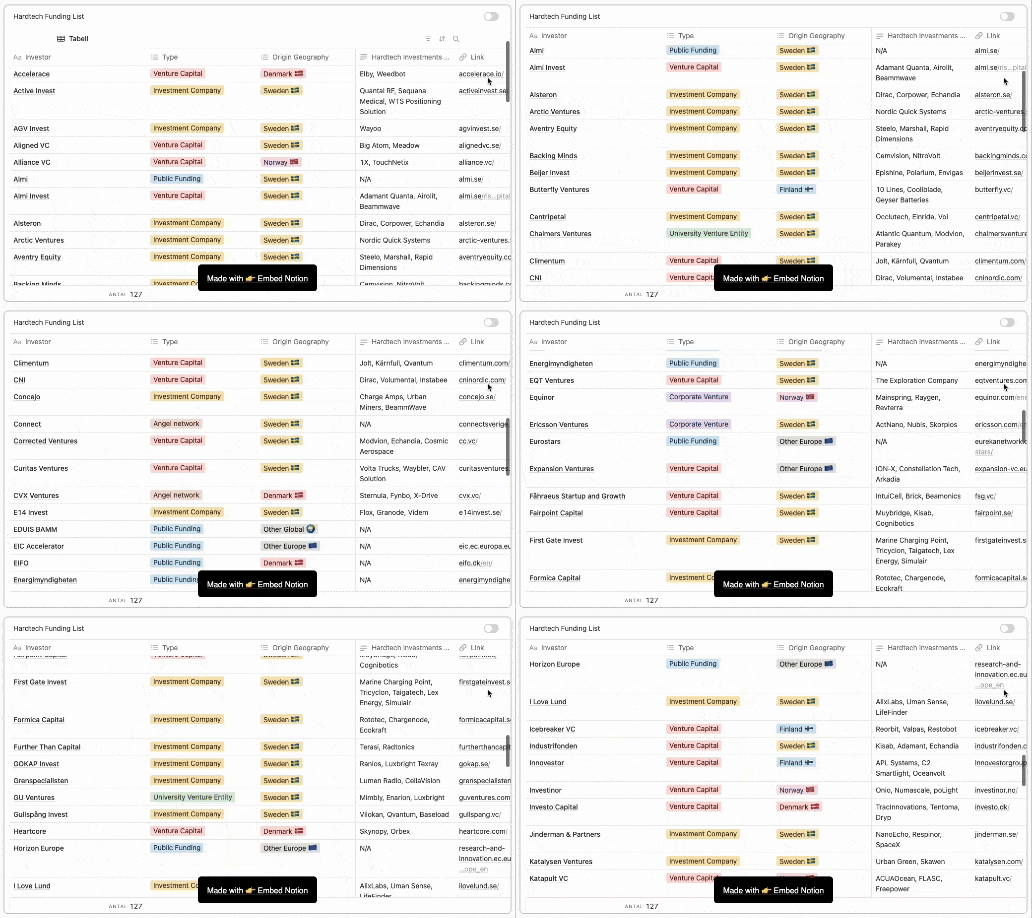
Nordic Hardtech Funding List
See who’s raising, scaling and building across the Nordics.
Nordic Hardtech is a platform for the hardtech ecosystem — sharing knowledge, bringing inspiration, and building community through podcasts, newsletters, events, and more.
💸 Fuel up. Scaling takes capital — The Nordic Hardtech Funding List shows you where to find it.
💥Get involved. Pitch a topic. Join the podcast. Get on the investor list– if you're hardtech.
→ Spotify | LinkedIn | nordichardtech.com
📩 hello@nordichardtech.com