New year.
New stakes.
A new year rarely arrives without noise. This one arrives with pressure. 2026 is shaping up to be a year where long-running tensions finally turn into decisions. About where technology is built. Who controls it. And whether Europe is content reacting, or ready to lead.
To open the year, we asked voices from across Nordic and European hardtech to share their predictions for what’s coming next – practical views on where momentum builds, where it slows, and what changes shape as a result. And no, not everything ahead is heavy. Some of 2026 looks surprisingly playful, which may matter more than we think.
Nordic Hardtech Partners 🤝
- Lightbringer: AI-powered patent service helping tech companies protect their edge fast, with in-house legal expertise. Book an intro.
- Recuro: Growth partner for hardtech and deeptech. Scale with profit.
- SISP (Swedish Incubators & Science Parks): The network for 60+ incubators and science parks in Sweden. Find yours here.
- The Yard: Gothenburg’s hub for co-working, community, and serious hardware. Explore their memberships.
Nordic Hardtech Outlook
This week: signals, bets and blind spots for 2026
Predictions for 2026
1. It will mark the start of a European hardtech renaissance
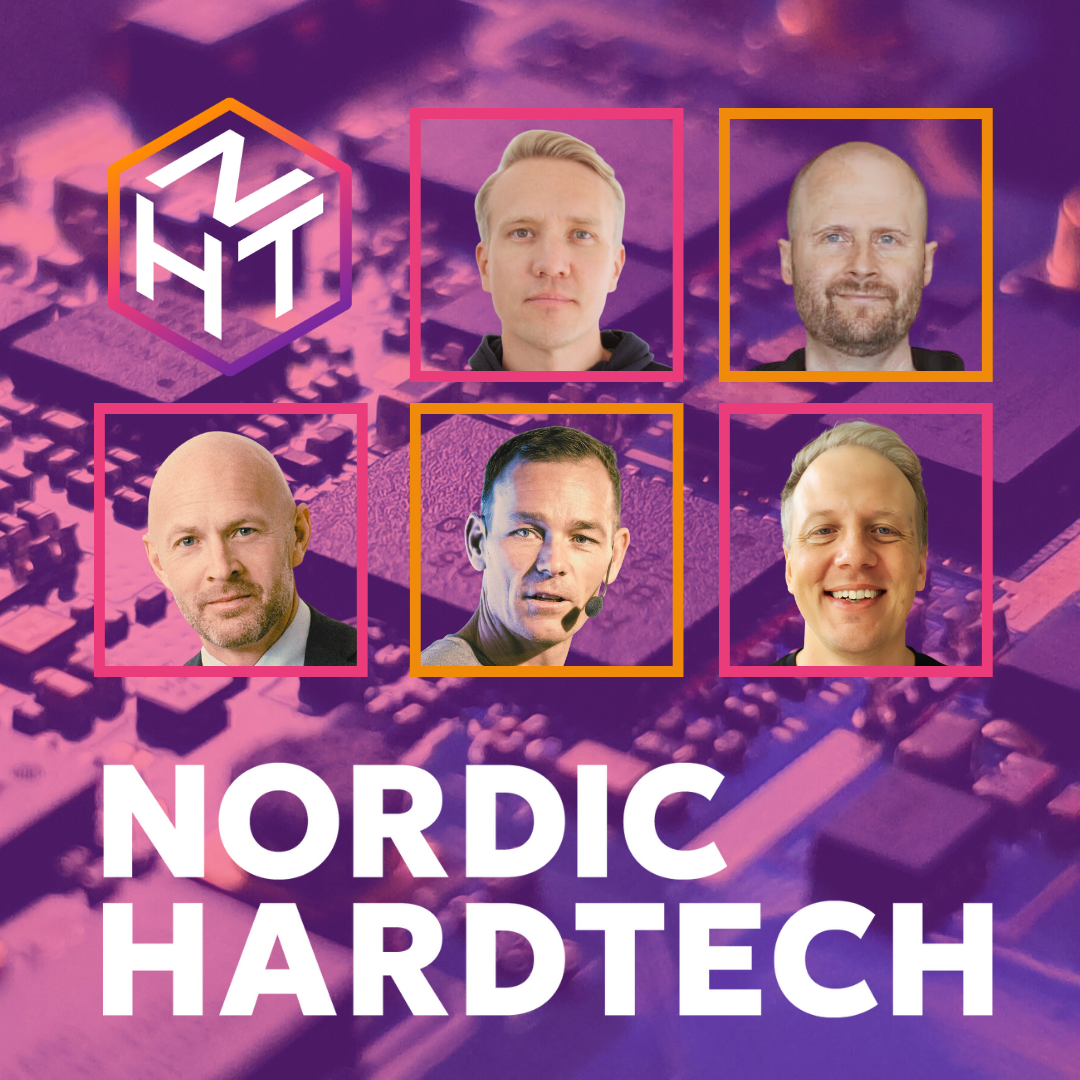
by Jonas Åström, Founder & Investor, Nordic Hardtech

2026 will be a defining year for European hardtech. Incremental progress is no longer enough. In key areas, Europe must shift from catching up to leading.
AI is becoming infrastructure rather than software, with direct implications for energy, compute, and industrial systems. Security and geopolitics increasingly shape technology choices and supply chains, pushing Europe to rethink autonomy and control. Constrained growth makes productivity and scalable systems more critical. Demographic trends reduce available labor and strain welfare systems. Climate change demands investment decisions that cannot be deferred.
Hardtech sits at the intersection of these forces. Whether we see them as threats or opportunities is up to us. Europe has strong foundations in science, engineering, and industry. 2026 will test whether we can build and scale critical technologies on our own terms.
Strategic autonomy is not inward-looking. It ensures that critical technologies are developed and scaled with clear responsibility for their global impact.
This requires companies built for long timelines, capital that understands industrial risk, a willingness to scale within Europe, and the ambition to think big from the start. Most importantly, it requires fast action and strong execution.
The task ahead is not to mirror others or play catch-up. It's to lead with confidence.
2. AI moves from feature to foundation
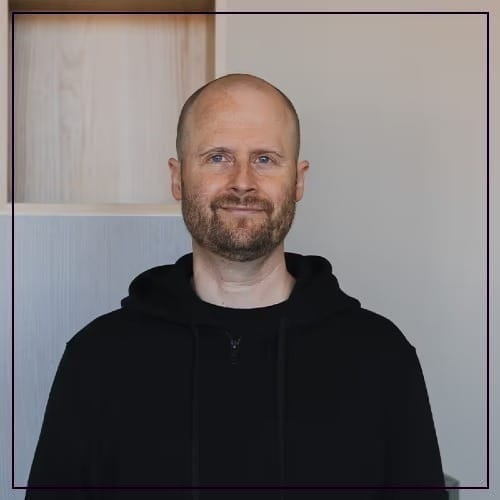
by Ola Wassvik, CCO & Co-founder at Lightbringer
In 2026, AI will stop sitting on top of hardtech products and start living inside them. It will increasingly be embedded directly into both products and product development processes. Design, testing and iteration will speed up, shortening cycles and reshaping what it means to build and scale hardware.
At the same time, startups will rethink how much they build themselves. Non-core functions such as finance, sales, IP management and compliance will move toward full-stack AI services, replacing slow, manual services and raising the operational baseline for even small teams.
Sensor fusion combined with AI will accelerate rapidly, driven by new sensor types and more capable edge intelligence. Systems will increasingly be able to perceive and act locally, in real time, across industries from energy to mobility.
In defense and security, timelines will compress the most. Geopolitical pressure will continue to push faster procurement, deployment and iteration, dramatically reducing time-to-market.
Taken together, these shifts signal one thing: AI is no longer a feature. It’s becoming the foundation of modern hardtech.
3.2026 will feel ten times longer than a year
by Johan Ronnestam, Entrepreneur, Creator & Speaker on the future of business.
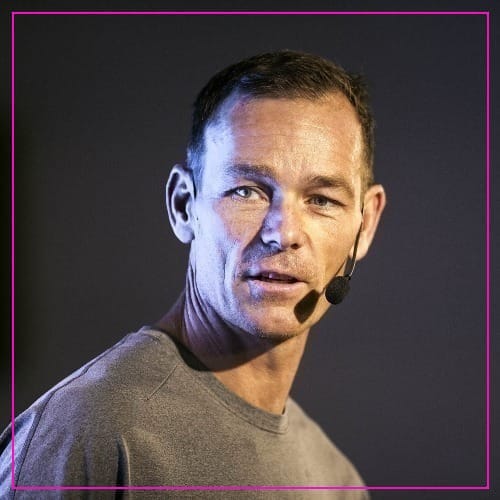
2026 won’t have 365 days. It will have 36,500.
That’s how it will feel.
We’ll write more lines of code than ever before, without knowing how to code. We’ll generate hours-long AI films instead of seconds. You’ll watch your first movie created with technologies like Walt Disney Imagineering’s Stuntronics.
Our agents will do the work of a thousand people in a single day. Vertical LLMs will radically streamline rule-heavy domains like legal work, accounting and business data. AI will move into every cloud service, every piece of software, consumer electronics, speakers, cameras, drones, cars — and eventually, our cities.
Human robotics and open hardware will leave the labs. Suddenly, anyone can build a car. (Go ahead, build yours on Hyundai’s MobED.)
And as the year draws to a close, I hope the toy robot — maybe Disney’s bipedal one — becomes the Christmas gift of the year.
And still… we won’t be amazed.
4. Energy resilience moves from ambition to necessity
by Niklas Boman, Founder & CEO at SeaPattern.

In 2026, energy resilience will become a clear priority in the Nordics, especially in Sweden. The conversation is no longer just about producing more fossil-free electricity, but about building an energy system that can withstand disruption and operate in a far more decentralised way.
Storm Johannes, which left more than 40,000 people without power just weeks ago, was a reminder of how vulnerable the system still is. At the same time, Europe is moving toward a full phase-out of Russian gas by 2027, increasing continental demand for reliable Nordic energy. In parallel, the Swedish government has introduced new measures and investigations aimed at safeguarding security of electricity supply and ensuring the system functions even under wartime conditions.
Taken together, these shifts point in the same direction. Companies enabling small-scale power generation will matter more than before, particularly those built around stable, predictable sources such as hydropower.
In 2026, resilience will no longer be a long-term ambition. It will be a near-term requirement.
5. Robots will take over your feed
by Martin Willers, Co-Founder at Transparent

The advance of the "green giant" NVIDIA is historic. At the tech conference CES, Jensen Huang declared that Physical AI, AI that acts in the real world, is now facing its own "ChatGPT moment". This shift is underscored by the world's leading minds, like Nobel laureate Demis Hassabis at DeepMind, now focusing on "world models" to develop an AI that can observe and reason about our physical reality.
The final bottleneck for the next breakthrough has been more data, as you cannot train robots on internet text the way you can with language models. That bottleneck is now breaking. Robotics is the fastest-growing dataset category on Hugging Face, increasing from 1,000 datasets in 2024 to 27,000 in 2025. This is driven by thousands of people actively teaching robots how to move, combined with vast amounts of synthetic data generated from simulations.
This data explosion is driving the development of the VLA (Vision-Language-Action) models that allow a robot to see a task, understand instructions, and perform an action. Like sorting your socks.
My prediction for 2026 is therefore simple: our video feeds will be flooded with demonstrations showing what this new generation of technology can actually accomplish. More robot fights, more robot firefighting, more robot laundry folding AND more robot dogs stalking real pet dogs!
Lately ⏮️
Selected news from the hardtech ecosystem
- Sifted has also published its predictions for 2026. Their journalists outline what may shape Europe’s tech year ahead, from IPO prospects to emerging themes.
- In his annual column for Breakit, Arash Gilan also shares 26 bold predictions for 2026. A wide-angle take on AI, platforms and the stories shaping tech’s next chapter.
- Thomas von Koch has invested SEK 125m in Swedish drone company ACC Innovation, bringing new attention to a previously low-profile player in advanced drone technology.
- Saab has won a SEK 12.3bn order from France for Globaleye airborne surveillance systems, reinforcing Europe’s push for sovereign defence capabilities.
- Filtrabit has secured a €2m anchor investment to scale its modular industrial dust extraction technology following commercial validation in Finland.
Up next ⏭️
What's brewing in the community?
- Techarena returns in 2026, bringing founders, operators and investors together around the next phase of Nordic and European tech. Dates, themes and speakers are starting to take shape.
- Speaking of events: OpenTech curates a broad Nordic event calendar that’s useful for tracking early tech and research signals, from AI and public systems to industrial innovation.
- Einride is hiring an Engineering Manager for autonomous driving hardware in Gothenburg. A senior role leading sensors, compute and supplier work at the core of an autonomous vehicle platform.
- Varjo is hiring a Staff Mixed Reality Engineer in Helsinki, working with real-time ML, imaging pipelines and performance-critical XR systems. Apply here.
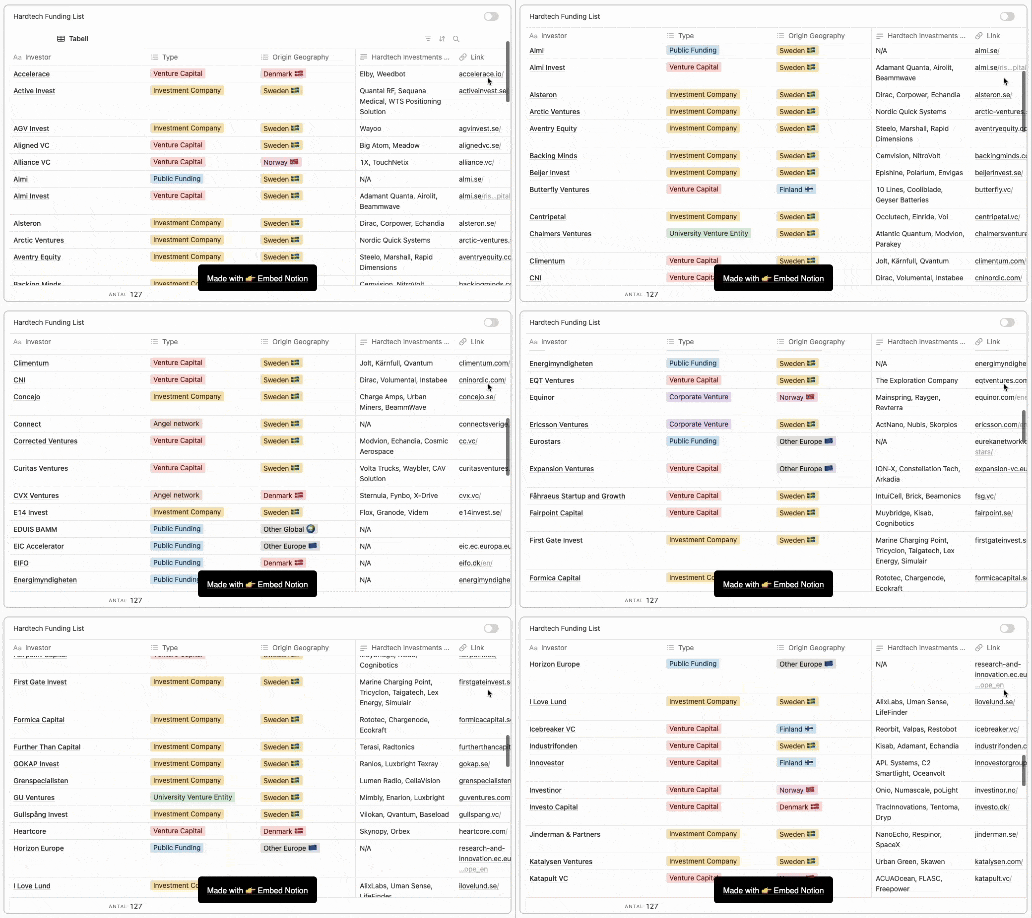
Nordic Hardtech Funding List
See who’s raising, scaling and building across the Nordics.
Nordic Hardtech is a platform for the hardtech ecosystem — sharing knowledge, bringing inspiration, and building community through podcasts, newsletters, events, and more.
💸 Fuel up. Scaling takes capital — The Nordic Hardtech Funding List shows you where to find it.
💥Get involved. Pitch a topic. Join the podcast. Get on the investor list– if you're hardtech.
→ Spotify | LinkedIn | nordichardtech.com
📩 hello@nordichardtech.com