Old tech breaks.
Good design doesn’t.
This week marks a milestone: our 30th podcast episode. Along the way, we’ve spoken with founders, engineers and investors shaping the Nordic hardtech scene – from early-stage dreamers to global scale-ups. But few stories capture the clash between design, tech, and sustainability as sharply as this one.
Per Brickstad, founder and chief designer of Transparent, joins us to talk circular design, timeless electronics and the belief that consumer tech shouldn’t be disposable. From Stockholm to Seoul, his six-person team is building a global hardware brand that challenges how we make, use and value the objects around us.
Also: since Sweden just published a cultural canon, we figured hardtech deserves one too.
Nordic Hardtech Partners 🤝
Nordic Hardtech is a community for builders of complex tech companies based on physical products. Here are some of our outstanding partners.
- Lightbringer: AI-powered patent platform helping tech companies protect their edge fast, with in-house legal expertise. Watch our recent IP webinar.
- Recuro: Growth partner for hardtech and deeptech. Book an intro.
- SISP (Swedish Incubators & Science Parks): The network for 60+ incubators and science parks in Sweden. Find yours here.
- The Yard: Gothenburg’s hub for co-working, community, and serious hardware. Explore their memberships.
Nordic Hardtech Podcast 🎧
This week: How to challenge an industry addicted to waste.
The Circular Sound Experiment That Refused to Break
"Only later do they discover the bigger mission of circularity"
From Nokia designer to founder of Transparent, Per Brickstad is turning frustration with throwaway gadgets into a global mission: building timeless hardware that actually improves with age.
Consumer electronics are built to fail. Batteries weaken, software stops updating, and cheap plastics break long before they should. For Per Brickstad, that reality was impossible to accept.
– As a designer you often come in too late, just to put makeup on a pig. But real change starts at the beginning. We wanted to design products for disassembly and upgrades from day one, says Per.
Brickstad’s career began at Nokia, where he designed portable speakers and headphones destined for mass production in the millions. Later, running a design studio for brands like IKEA, he saw the same cycle of waste repeated across consumer electronics. After a decade inside the system, he and his co-founders decided to challenge it.
Suddenly the designers had to deliver
Transparent’s origin was anything but corporate. A conceptual post on Tumblr imagined a speaker that could be truly timeless. The internet noticed, Wired invited the team to CES, and suddenly the designers had to deliver a real product.
– We had the audacity to put something out there we believed in. And when people told us to bring a real speaker, we actually built one for the first time, says Per.
That gamble became the foundation of Transparent’s first crowdfunding campaign, which financed production and launched the company into the world. Today its “permanent collection” includes speakers, turntables and modular upgrades designed to evolve over decades rather than be replaced each season.
– We’re disrupting what we call "the design audio category". Our customers care about sound and aesthetics first – and only later do they discover the bigger mission of circularity.
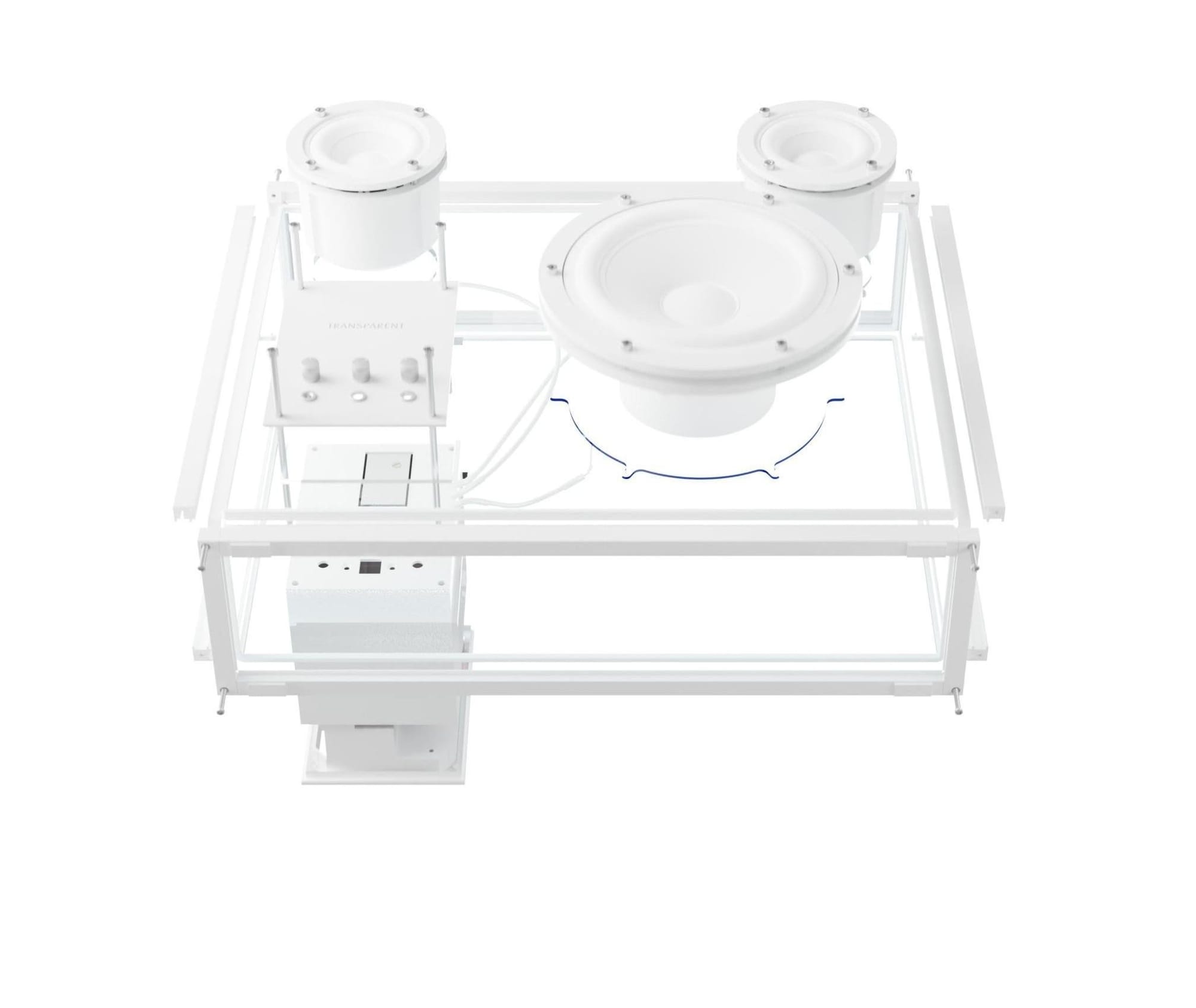
The philosophy has real consequences. Designing for disassembly requires more engineering effort than gluing components together. Sourcing certified recycled materials adds complexity compared to using virgin resources. But for Transparent, those trade-offs are central to building hardware that lasts.
– We’re far from finished with our vision. Every year we upgrade our platforms with new materials, new modules, better standards. But you can’t solve everything overnight. Sometimes you have to be pragmatic, and that’s part of the process, Per explains.
The same pragmatism applies to business strategy. Unlike most hardware startups chasing hypergrowth and venture capital, Transparent has grown steadily, keeping its team small and its focus sharp. Funding has been selective and strategic, often from investors who care about design and sustainability as much as returns.
– We’re not a great VC case if you want a 10x return in a year. But for partners who believe in challenging bad tech habits, we’re the right fit, says Per.
Timeless hardware isn’t just a niche idea
Distribution follows the same logic. Rather than flooding big-box stores, Transparent partners with design and fashion retailers worldwide, where craftsmanship and materials matter. In those channels the brand often outperforms larger tech names. Direct-to-consumer sales are also expanding, where circularity comes to life: every purchase is the start of a long-term relationship.
– For us, the purchase is where everything starts. A customer may move, change their system, or need an upgrade, and we make that possible instead of forcing them to throw it all away, says Per.
Looking forward, Transparent’s design philosophy isn’t limited to audio. Brickstad sees opportunities to apply circular, modular thinking to other categories of tech. But the bigger ambition is clear: to prove that timeless hardware isn’t just a niche idea, but a viable model for the entire industry.
On everyone’s radar 👀
Culture goes hardtech
Who Makes the Nordic Hardtech Canon?
Sweden just published its official cultural canon — a list of novels, paintings and pop culture classics deemed essential to the nation’s identity. IKEA made the cut. ABBA didn’t.
But if we played the same game for Nordic hardtech, which inventions and companies would count as our industrial canon? The rules: at least 30 years old, proven impact, and still shaping how the world builds – with a little help from ChatGPT.
- ASEA/ABB HVDC (Sweden) – pioneered high-voltage direct current in the 1950s, still the backbone of global energy transmission.
- Johansson’s adjustable wrench (Sweden, 1891) – the tool that never left the toolbox.
- Volvo three-point seatbelt (Sweden, 1959) – the safety innovation that saved millions, given away royalty-free.
- Nokia (Finland) – from boots to phones, and a global tech empire that defined an era.
- Bang & Olufsen (Denmark, 1925) – making design and sound inseparable.
- Kone (Finland, 1910) – elevators and escalators that shaped modern cities.
- SKF (Sweden, 1907) – the bearing company that made industry run smoother.
- Vestas (Denmark, 1945) – pioneers of wind power, still leading the turbine race.
- Saab Aerospace (Sweden, 1937 →) – pushing the limits of aviation and defense hardware.
- Lego (Denmark, 1932) – technically toys, but really a modular hardware system before the term existed.
Industrial design as national identity? It’s not just furniture. It’s infrastructure, tools, turbines and safety gear — the stuff that outlasts hype.
The open question: which of today’s Nordic hardtech startups will make the canon 50 years from now?
Curated by Nordic Hardtech — with a little help from ChatGPT.
Lately ⏮️
Selected news from the hardtech ecosystem
- Nordic Alpha Partners snaps up MicroShade’s patents to scale solar-shading glass. A clear shot at cutting HVAC, costs and CO₂. Get the full scoop.
- Swedish Eco Wave Power launches Taiwan’s first wave-to-energy pilot at Suao Port, a step that could scale to 20 MW and prove wave power viable in Asia.
- A new framework for hardware product financials breaks down BOM, ASP and LTV into startup-friendly terms. A must-read for founders juggling margins and models. Dive in!
- NewSpace is finally on Sweden’s agenda. Aaron Dinardi, Regional Space Coordinator in Västra Götaland, joined Teknikföretagen to outline the changes needed — full talk now available. Watch it here.
Up next ⏭️
What's brewing in the community?
- Stockholm Business Region and Almi host Tillväxtdagen on Oct 9 at Kulturhuset. A full day on growth, funding and networking — with voices like Ted Elvhage (interviewed in our podcast earlier). Register here.
- CorPower Ocean is hiring a CFO to steer its €100M-backed wave energy scale-up — structuring farms and global manufacturing. Apply here!
- …and the company is also looking for a software engineer in Stockholm to develop control systems for its next-gen wave energy converters.
- Endeit Capital leads a €12.5M round in Deftpower, betting on AI-powered EV charging to cut costs, clean the grid and fix a messy driver experience.
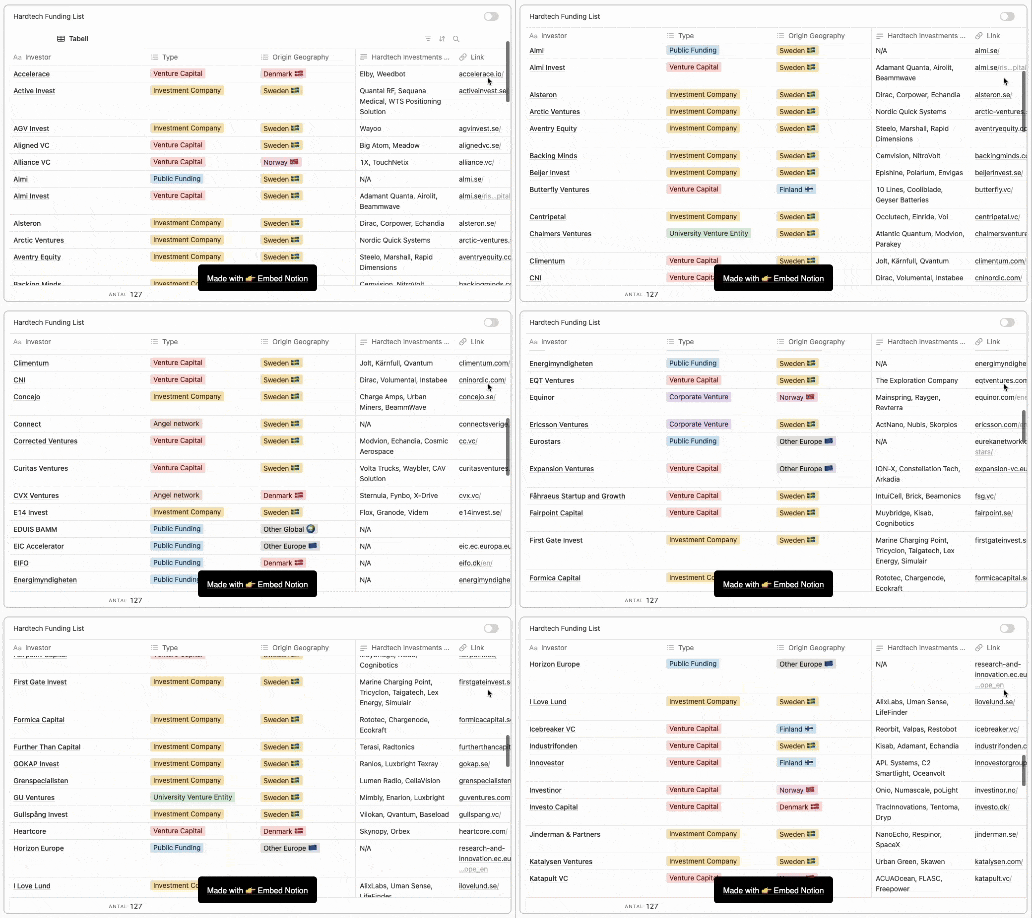
Looking for funding? Start here.
We’ve curated the investors who actually get hardtech — so you can skip the noise and focus on the right doors.
Nordic Hardtech is a platform for the hardtech ecosystem — sharing knowledge, bringing inspiration, and building community through podcasts, newsletters, events, and more.
💸 Fuel up. Scaling takes capital — The Nordic Hardtech Funding List shows you where to find it.
💥Get involved. Pitch a topic. Join the podcast. Get on the investor list– if you're hardtech.
→ Spotify | LinkedIn | nordichardtech.com
📩 hello@nordichardtech.com